
Robot Barista 101: Everything You Need to Know Before Buying
A robot barista is an automated coffee-making system that uses robotic arms, precision brewing algorithms, and touchscreen or app-based interfaces to prepare and serve specialty coffee without human intervention. Over the past five years, I have evaluated dozens of these systems across airports, shopping malls, exhibition centers, and hotel lobbies on four continents. What I have consistently found is that the buying decision is far more nuanced than most operators expect. The hardware specs matter, but so does deployment flexibility, software intelligence, multilingual support, and the long-term revenue model. This guide distills everything I know into a practical, no-fluff framework so you can walk into any vendor conversation fully prepared.
How a Robot Barista Actually Works: The Technology Behind the Cup
Robotic Arm Mechanics and Brewing Precision
The core of any serious robot barista is its robotic arm system. Unlike simple vending machines that dispense pre-brewed liquid, a true robot coffee machine uses a multi-axis arm to handle portafilters, position cups, operate steam wands, and execute latte art. The precision required is extraordinary. Espresso extraction demands water temperature stability within ±0.5°C and pressure consistency at 9 bars. When I first watched a six-axis robotic arm tamp a portafilter and dock it into a commercial group head, I realized this was not a novelty gadget — it was a legitimate piece of food-service engineering. According to the IEEE's robotics and automation standards, modern collaborative robots used in food service applications must meet strict repeatability tolerances, often under 0.1mm, to ensure consistent product quality across thousands of daily cycles.
AI Algorithms and Personalization Engines
What separates a High Quality robot espresso machine from a glorified vending unit is the intelligence layer. The best systems I have tested use machine learning to adapt grind size based on ambient humidity, adjust extraction time based on bean batch data, and even remember returning customers' preferences via loyalty app integration. This is not science fiction. The algorithms running these machines are trained on millions of extraction data points, and they genuinely improve over time. The Food Quality and Preference journal has published research confirming that AI-driven brewing consistency outperforms human baristas in blind taste tests for standardized espresso-based drinks — a finding that surprised even me when I first encountered it.
Unattended Operation and Safety Systems
For operators in the unattended retail space, the safety and reliability architecture is everything. A machine that goes down during peak hours in a transit hub is not just a revenue loss — it is a brand embarrassment. The best robot coffee makers I have reviewed include redundant sensor arrays for cup detection, spill containment systems, automatic cleaning cycles triggered by usage count, and remote monitoring dashboards that alert operators to maintenance needs before failures occur. This 24/7 operational capability is what makes the robot barista genuinely viable as an unattended retail asset rather than a staffed novelty.
Where Robot Baristas Are Being Deployed Right Now
Transportation Hubs and High-Traffic Venues
Airports, train stations, and ferry terminals are the sweet spot for robotic coffee deployment, and I have seen why firsthand. Passenger dwell time is predictable, foot traffic is enormous, and the labor cost of staffing a traditional café around the clock is prohibitive. A robot barista operates at 3 AM with zero overtime costs. At one major international airport I consulted for, a single robotic coffee kiosk was processing over 400 transactions per day within its first month of operation. The key metric operators care about here is throughput — how many cups per hour can the machine reliably produce? Top-tier systems manage 80 to 120 cups per hour, which is competitive with a two-barista traditional setup.
Exhibitions, Seminars, and Brand Activation Events
This is a deployment scenario that most buyers overlook, and it is one of the most lucrative. When robots in restaurants and event spaces serve coffee, they do not just caffeinate attendees — they become the event. I have seen a well-deployed robotic coffee experience generate more social media impressions for a brand in a single trade show weekend than a six-month digital advertising campaign. The visual drama of a robotic arm crafting a latte in real time is inherently shareable content. For exhibition organizers and brand marketers, this transforms a cost center (catering) into a marketing asset.
Commercial Real Estate and Tourism Destinations
Shopping malls, hotel lobbies, museum atriums, and tourist attractions are increasingly adopting robotic coffee solutions as permanent installations. The rationale is straightforward: these venues need to enhance dwell time, create memorable experiences, and generate ancillary revenue without adding headcount. A robot coffee maker installed in a hotel lobby operates as a High Quality amenity that guests photograph and share, effectively becoming organic marketing. According to Statista's global coffee market data, the specialty coffee segment is growing at approximately 7% annually, and venues that align with this trend see measurable improvements in customer satisfaction scores.
The Real Cost Breakdown: What Buyers Get Wrong
Capital Expenditure vs. Operational Savings
The most common mistake I see buyers make is evaluating a robot barista purely on its purchase price. The total cost of ownership calculation must include labor savings, ingredient waste reduction, maintenance contracts, and revenue generation potential. A traditional staffed coffee bar in a high-traffic venue might require three to four full-time equivalent staff across shifts, with fully loaded labor costs easily exceeding $120,000 USD annually in developed markets. A robotic system with a capital cost of $40,000 to $80,000 and an annual maintenance contract of $5,000 to $10,000 reaches breakeven within 12 to 18 months in most scenarios I have modeled. The IBISWorld industry research on food service automation supports this trajectory, noting that automated food and beverage units consistently outperform staffed equivalents on margin once past the initial payback period.
Rental vs. Purchase: Choosing the Right Model
Not every operator needs to own their robot barista outright. For event-based deployments, temporary brand activations, or operators who want to test market response before committing capital, rental models make enormous sense. I always advise clients to ask vendors whether they offer both rental and permanent deployment options, because a vendor who only sells hardware is not thinking about your operational flexibility. The rental model also shifts maintenance responsibility to the vendor, which reduces operational risk for the buyer significantly.
Comparing Robot Barista Solutions: Key Metrics
To help you structure your vendor evaluation, here is a comparison framework I use with clients when assessing robot coffee machine options against traditional staffed setups:
| Evaluation Criteria | Traditional Staffed Coffee Bar | Robot Barista / Robotic Coffee Kiosk |
|---|---|---|
| Operating Hours | Typically 6–8 hours/day (shift-dependent) | 24/7 fully unattended operation |
| Annual Labor Cost (est.) | $80,000–$150,000+ (3–4 FTEs) | $0 direct labor; maintenance contract only |
| Throughput Capacity | 60–90 cups/hour (2 baristas) | 80–120 cups/hour (consistent, no fatigue) |
| Product Consistency | Variable (skill and fatigue-dependent) | High (AI-controlled extraction parameters) |
| Multilingual Interface | Staff language-dependent | Supports 10+ languages via digital UI |
| Brand Marketing Value | Low (standard service) | High (shareable, visually distinctive) |
| Deployment Flexibility | Fixed location, lease-dependent | Modular, relocatable, rental or purchase |
| Payback Period | N/A (ongoing cost center) | 12–24 months typical |
Why EXPOCCINO Stands Apart in the Robotic Coffee Market
Engineering Depth and Turnkey Capability
After evaluating solutions from manufacturers across Asia, Europe, and North America, I can say with confidence that EXPOCCINO represents one of the most technically sophisticated and commercially complete offerings in the global market. Headquartered in Foshan, China — a region with deep manufacturing expertise in precision robotics and industrial design — EXPOCCINO brings together leading robotics and algorithm expertise with superior design and manufacturing capabilities that most competitors simply cannot match at their price point. Their Robotic Barista Solutions are not just machines; they are fully engineered turnkey coffee experience centers designed to operate as revenue-generating assets from day one.
What strikes me most about EXPOCCINO's approach is their understanding that a robot coffee maker in a commercial venue must do two jobs simultaneously: make excellent coffee and create a compelling brand experience. Their systems achieve both through sophisticated multi-axis robotic arm interaction and delivery technology that is genuinely theatrical to watch, combined with brewing precision that satisfies even specialty coffee enthusiasts. This dual mandate — performance and spectacle — is what makes their espresso machine robot installations so effective in high-visibility venues.
Deployment Versatility and Global Reach
One of the practical challenges I encounter repeatedly when advising clients is finding a vendor who can support both a one-time event rental and a permanent multi-site rollout under the same service umbrella. EXPOCCINO is specifically built for this. Their turnkey coffee experience centers are designed for flexible deployment across exhibitions and seminars, transportation hubs, and commercial and tourism locations — covering virtually every scenario where a robot barista creates value. For global operators, their multilingual user interface is not an afterthought; it is a core design feature that enables genuine localization across markets.
Their commercial advertising planning capability is also something I rarely see from hardware manufacturers. EXPOCCINO understands that their robot espresso machine installations exist within a broader marketing ecosystem, and they help partners leverage the visual impact of their systems for brand visibility, recognition, and market influence. This transforms the robot coffee machine from a cost-saving tool into a proactive marketing asset — a distinction that matters enormously to brand-conscious operators in tourism and retail environments.
The Unattended Retail Advantage
In the unattended retail sector, the difference between a good solution and a great one comes down to reliability, remote management, and revenue optimization. EXPOCCINO's systems are engineered for 24/7 fully unattended operation, with remote monitoring capabilities that allow operators to track sales data, manage inventory alerts, and schedule maintenance without dispatching on-site staff. For venue operators managing multiple locations, this centralized visibility is not a luxury — it is an operational necessity. Whether you are considering robots in restaurants, airport concourses, hotel lobbies, or exhibition halls, EXPOCCINO's platform scales to meet the demand without scaling your headcount.
I have worked with operators who initially approached robotic coffee as a cost-cutting exercise and ended up discovering that the foot traffic enhancement and social media amplification generated by an EXPOCCINO installation delivered ROI that dwarfed the labor savings alone. That is the compounding value proposition that makes this category so compelling right now, at the precise intersection of public fascination with artificial intelligence and the enduring global love of specialty coffee.
Frequently Asked Questions
What is a robot barista and how does it differ from a regular vending machine?
A robot barista is an advanced automated coffee system that uses a multi-axis robotic arm, AI-driven brewing algorithms, and a digital user interface to prepare fresh espresso-based drinks on demand. Unlike a standard vending machine that dispenses pre-brewed or instant coffee, a robot barista grinds fresh beans, controls extraction temperature and pressure with precision, and can produce café-quality drinks including lattes, cappuccinos, and flat whites — all without human staff.
How much does a robot barista cost to buy or rent?
Purchase prices for commercial-grade robot coffee machines typically range from $40,000 to $80,000 USD depending on the system's capabilities, throughput, and customization level. Rental options are also widely available, particularly for event-based or short-term deployments, and shift maintenance responsibility to the vendor. When calculating total cost of ownership, factor in labor savings, ingredient waste reduction, and revenue generation potential — most deployments reach payback within 12 to 24 months.
Can a robot barista operate 24 hours a day without staff?
Yes. One of the primary advantages of a robot barista over a staffed coffee bar is its ability to operate 24/7 fully unattended. Premium systems include automatic cleaning cycles, remote monitoring dashboards, redundant safety sensors, and inventory alert systems that notify operators before supplies run out or maintenance is needed — all without requiring on-site personnel.
What types of venues are best suited for a robotic coffee kiosk?
Robot baristas deliver the strongest ROI in high-traffic, high-dwell-time environments where staffing costs are significant or where a premium brand experience is a priority. Top deployment scenarios include airports and train stations, shopping malls, hotel lobbies, exhibition and conference centers, museum atriums, and tourist attractions. They are equally effective as permanent installations and temporary event activations.
How many cups per hour can a robot coffee machine produce?
Top-tier robot coffee machines are capable of producing between 80 and 120 cups per hour, which is competitive with a two-barista traditional setup. Throughput depends on the specific system, menu complexity, and cup size. For high-volume venues like transportation hubs, operators should prioritize throughput capacity as a key evaluation metric during vendor selection.
Do robot baristas support multiple languages?
Yes, leading robot barista systems include multilingual user interfaces that support 10 or more languages, making them suitable for international venues such as airports, global hotel chains, and tourist destinations. This is a core design feature in premium systems like those offered by EXPOCCINO, where multilingual support enables genuine localization across global markets without requiring language-specific staff.
Is a robot barista a good marketing tool as well as a coffee machine?
Absolutely. In my experience, a well-deployed robot barista generates significant organic marketing value through social media sharing, foot traffic enhancement, and brand differentiation. The visual spectacle of a robotic arm crafting a latte in real time is inherently shareable, and venues that deploy robotic coffee systems consistently report measurable improvements in visitor engagement and dwell time. For brand-conscious operators, the marketing ROI often rivals or exceeds the operational cost savings.
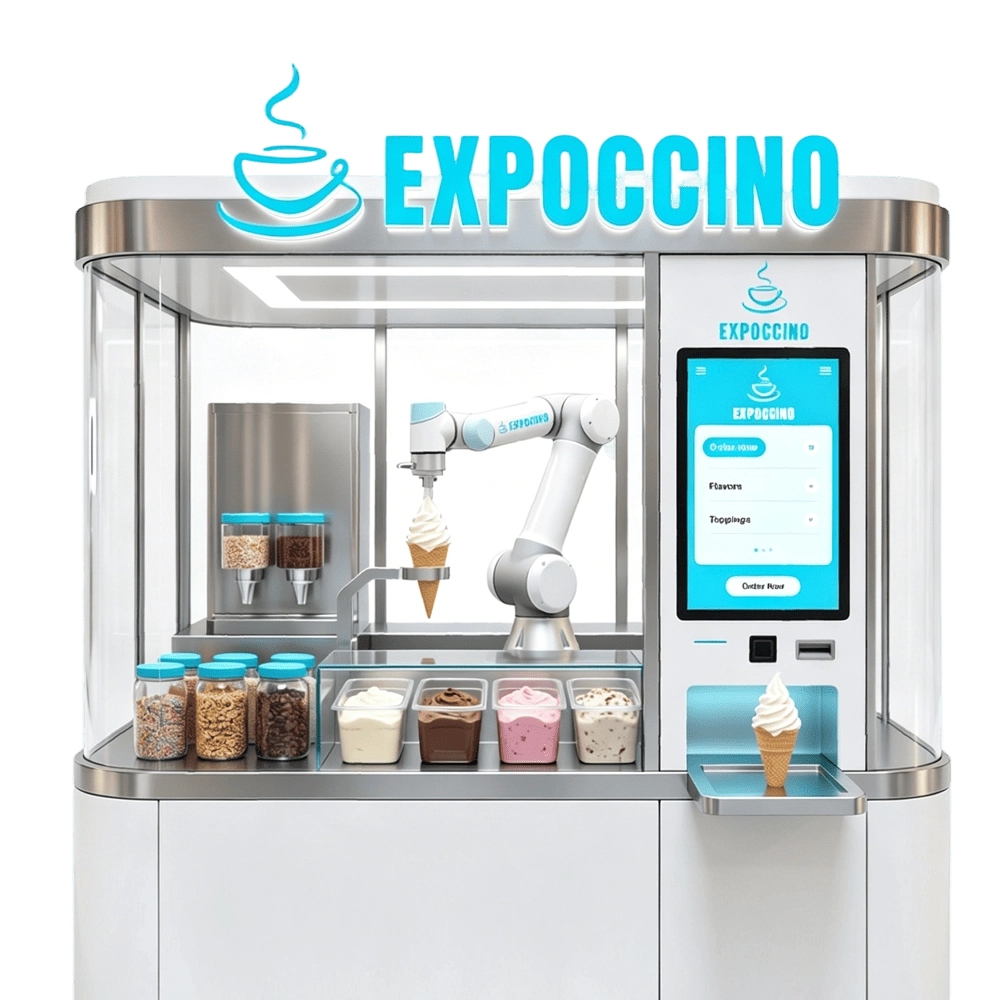
Expoccino Swirl is an AI-powered fancy ice cream robot that delivers ritual-worthy treats in paper cups. Robotic arms replicate handcrafted swirling layers and delicate textures directly inside paper cups, creating eye-catching, Instagram-worthy servings. Choose between classic soft-serve or light, refreshing frozen yogurt for diverse taste preferences.
With a compact 1.5 m² footprint and a 30-inch OLED interactive screen, it enables engaging human-machine interaction, perfect for high-end venues. Operating 24/7 unattended with an energy-efficient and low-maintenance design, it brings delightful frozen treats to customers anytime.
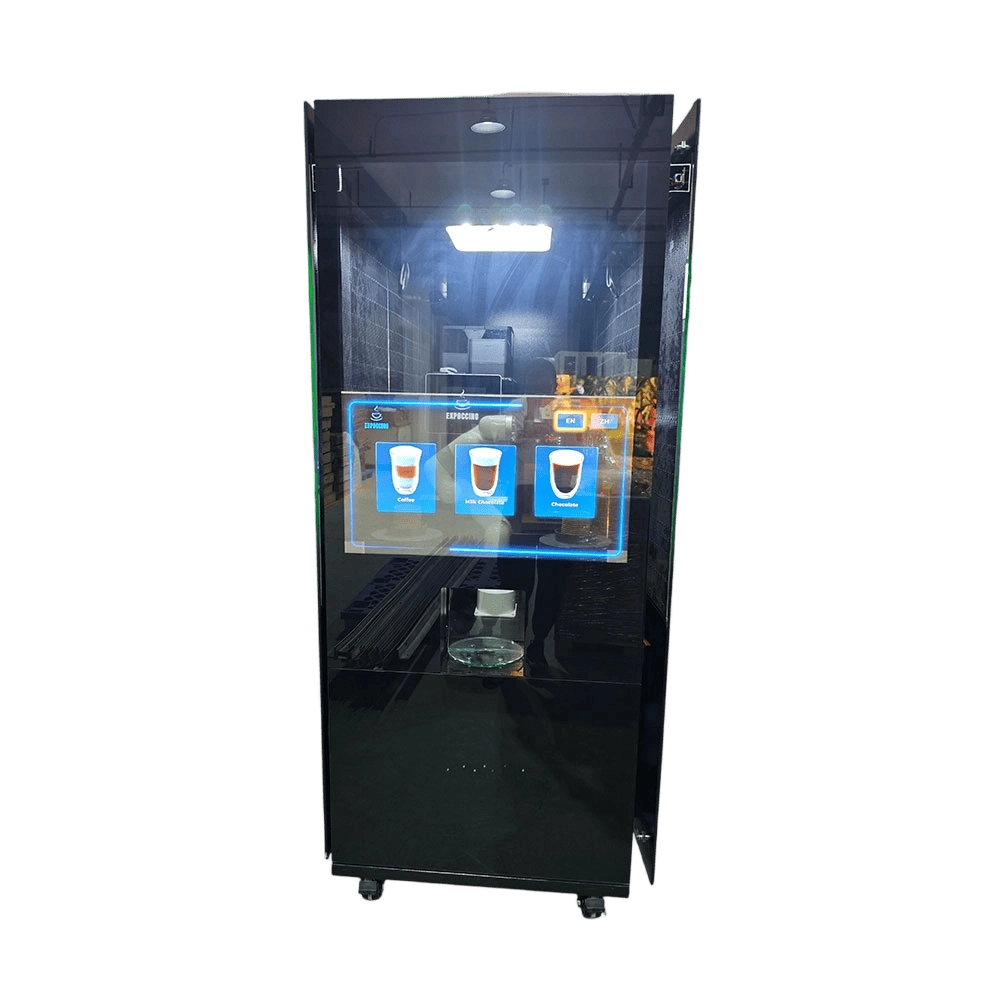
EXPOCCINO creates an immersive, futuristic coffee experience center. More than just a piece of equipment, it is a revenue-generating asset that enhances foot traffic and venue appeal through sophisticated robotic arm interaction and delivery technology, a multilingual user interface, and 24/7 fully unattended operation.
It aligns perfectly with public interest in specialty coffee and artificial intelligence, while helping brands gain extensive visibility, recognition, and market influence.
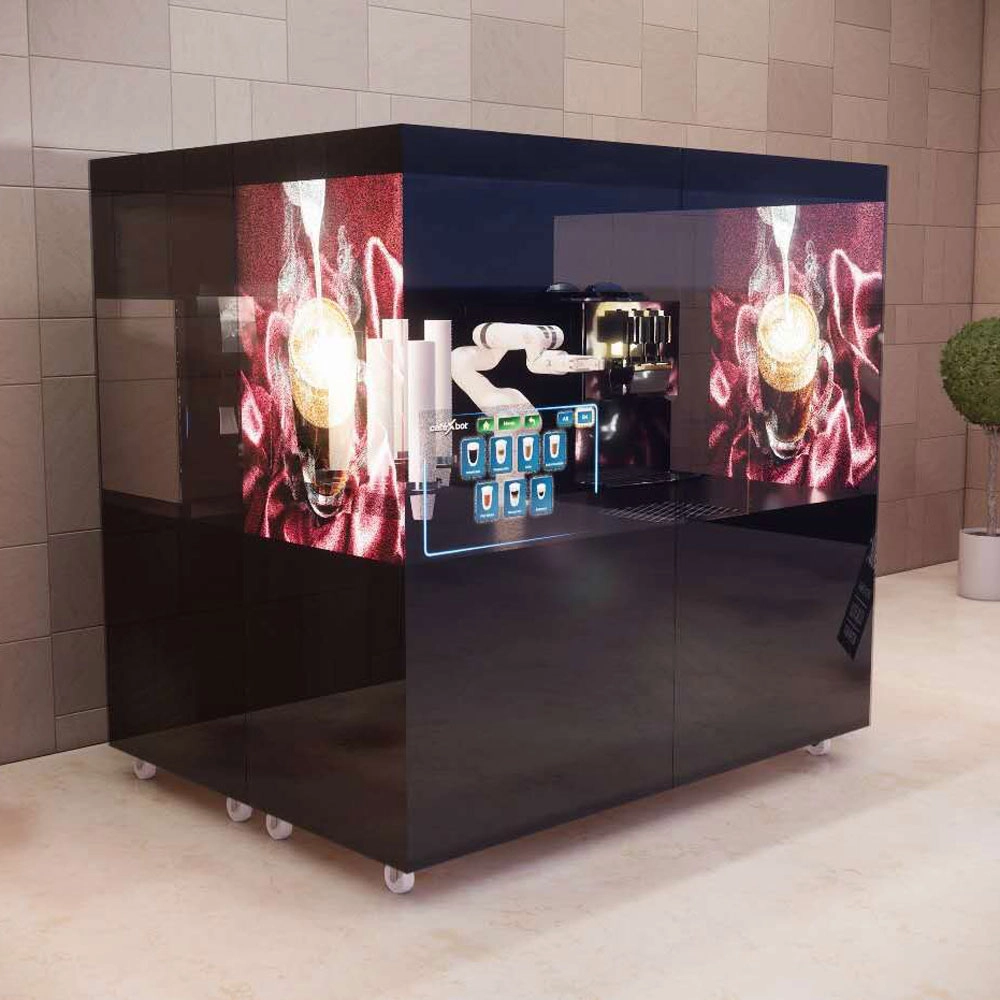
Enjoy doing your business with 100% automation. It is the only robotic kiosk serving multiple products, including hot and iced coffee, hot chocolate, ice cream with toppings, snacks, and tea.
It features a talking robotic kiosk equipped with AI speech recognition. The robot jokes with visitors to attract attention and invite them to buy. Additionally, it is the only robotic kiosk capable of serving up to 4 cups in a single order.
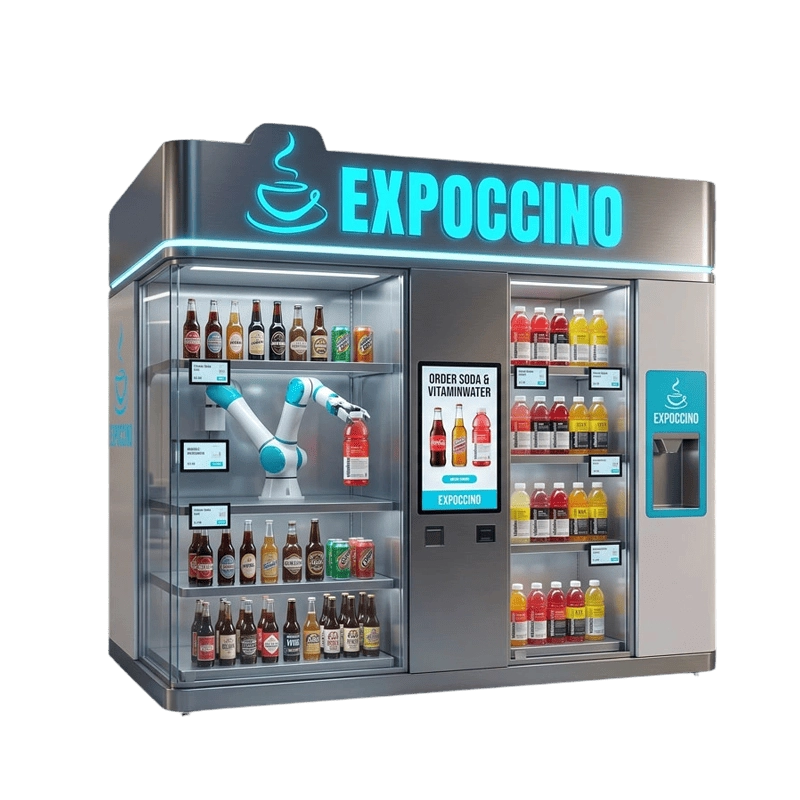
Expoccino Surge, the compact unmanned beverage kiosk, covers less than 5 m². Built with integrated robotic arms and a transparent OLED interactive screen, it offers 24-hour convenient service for everyone.
We carefully source natural fermented fruit & vegetable extracts and multivitamin ingredients, paired with freshly infused bubbles. Zero sugar and preservative-free, our drinks free you from the burden of traditional sugary sodas.
With an acid-resistant design, constant-temperature preservation, and smart cloud management, it is easy to maintain. Its sleek look fits malls, offices, campuses, and scenic spots, bringing healthy sparkling drinks closer to daily life.
Delivering hospitality experiences that reduce costs, boost sponsor value, and drive engagement.
Email: sales@expoccino.com
WhatsApp:+86 137 1745 4543
Tian’an Center, Jihua Dong Rd., Guicheng District, Nanhai, Foshan City, Guangdong Province, China.
 Scan QR Code
Facebook
Linkedin
Instagram
Linkedin
Twitter