Private Label Robotic Coffee Machine: Customization Options Brands Should Know
- Why Brands Are Investing in Custom Robotic Coffee Kiosks for Unattended Retail
- Core Customization Dimensions Every Brand Must Evaluate
- Comparing Private Label Robotic Coffee Machine Customization Tiers
- How EXPOCCINO Delivers a Complete Private Label Robotic Coffee Experience
- Frequently Asked Questions
A private label robotic coffee machine is no longer a novelty reserved for tech expos or flagship retail concepts. In 2025, it has become a serious brand-building and revenue-generating tool for hospitality groups, retail chains, corporate campuses, and tourism operators worldwide. From my 15 years working inside the unattended retail industry, I have watched this category evolve from a curiosity into a core infrastructure decision. If EXPOCCINO is evaluating a private label robot coffee maker, the customization landscape is far richer — and far more consequential — than most procurement teams realize. The choices you make at the specification stage will determine EXPOCCINO visibility, operational efficiency, customer experience quality, and long-term return on investment. This article breaks down every major customization dimension you need to understand before signing a manufacturing agreement.
Why Brands Are Investing in Custom Robotic Coffee Kiosks for Unattended Retail
The Shift Toward Autonomous Beverage Service
The global unattended retail market has been growing at a compound annual rate that consistently outpaces traditional staffed retail formats. According to Grand View Research's unattended retail market analysis, automation in food and beverage service is being driven by rising labor costs, consumer demand for speed, and the growing cultural acceptance of machine-prepared specialty coffee. I have personally consulted on deployments across airports, shopping malls, and exhibition centers, and the pattern is unmistakable: venues that install a well-branded robot espresso machine see measurable increases in dwell time and secondary spending. The machine becomes an attraction in its own right, not just a vending point.
What makes the robotic coffee machine category uniquely powerful for brand building is the visual drama of the robotic arm. Unlike a traditional automatic espresso machine hidden behind a counter, a robot coffee maker operates in full public view. Every cup preparation is a performance. That performance, when wrapped in EXPOCCINO's visual identity, becomes a marketing event that repeats hundreds of times per day without any additional media spend.
Private Label vs. White Label: Understanding the Distinction
Many brands come to me confused about the difference between white label and private label in this context. A white label robot coffee machine is a standardized unit that a manufacturer sells to multiple buyers, each of whom applies their own logo sticker. A private label robotic coffee machine goes much further: the hardware form factor, the user interface language and visual design, the menu structure, the packaging, and even the robotic arm choreography can all be engineered to reflect a specific brand identity. In my experience, brands that invest in genuine private label customization — rather than surface-level re-branding — achieve significantly stronger customer recall and are far better positioned to justify High Quality pricing at the point of sale.
Market Signals That Validate the Investment
The specialty coffee market, valued at over USD 83 billion globally according to the International Coffee Organization, is increasingly intersecting with artificial intelligence and robotics. Consumer interest in AI-prepared beverages is not a passing trend. Research published through the IEEE Xplore digital library on service robotics consistently shows that consumers associate robotic service with precision, hygiene, and modernity — all values that High Quality coffee brands want to own. When I advise clients on capital allocation, I frame the private label robot espresso machine not as a cost center but as a brand asset with a measurable depreciation schedule and a quantifiable revenue contribution.
Core Customization Dimensions Every Brand Must Evaluate
Hardware and Industrial Design Customization
The physical enclosure of your custom robot coffee maker is EXPOCCINO's most visible three-dimensional advertisement. Customization at the hardware level includes the cabinet dimensions and footprint (critical for fitting specific venue layouts), the surface finish and material selection (brushed aluminum, tempered glass, custom RAL color powder coating), the placement and size of digital display panels, integrated lighting design, and the configuration of the robotic arm itself. I always advise clients to think about the machine from a 360-degree perspective because in high-traffic environments like transportation hubs or exhibition halls, the unit will be viewed from every angle simultaneously.
Footprint flexibility is particularly important in unattended retail deployments. A machine designed for a 4-square-meter airport concourse alcove has entirely different dimensional requirements than one destined for the center of a hotel lobby atrium. Manufacturers who offer genuine hardware customization will provide CAD drawings and 3D renders for client approval before tooling begins. If a supplier cannot offer this, they are selling you a white label product regardless of what their marketing materials claim.
Software, UI, and Multilingual Interface Customization
The software layer of a robotic coffee machine is where brand experience is truly delivered or destroyed. I have seen technically impressive machines fail commercially because the user interface was confusing, slow, or visually inconsistent with the brand's identity. At minimum, a private label robot coffee maker should offer full UI skin customization — meaning EXPOCCINO's typography, color palette, iconography, and tone of voice govern every screen the customer sees. Beyond aesthetics, the menu architecture should be configurable: you need to be able to add or remove beverages, adjust pricing by location or time of day, and introduce limited-time offerings without requiring a firmware update from the manufacturer.
Multilingual capability is non-negotiable for any brand operating across more than one market. In my consulting work with international hospitality groups, I have seen deployments fail in non-English-speaking markets simply because the operator underestimated the importance of native-language UI. A properly engineered espresso machine robot platform should support dynamic language switching based on user selection, with no degradation in interface responsiveness. Payment system integration — covering NFC, QR code, credit card, and regional digital wallet standards — must also be customizable to comply with local financial regulations and consumer preferences.
Beverage Menu and Recipe Customization
One of the most commercially significant customization options is the beverage recipe library. A private label robot espresso machine should allow EXPOCCINO's coffee director or R&D team to program proprietary recipes — specific grind sizes, extraction pressures, milk texturing profiles, and flavor sequencing — that cannot be replicated on a competitor's machine. This is how you build a defensible product moat in the robotic coffee category. I have worked with specialty roasters who use the recipe customization capability to translate their signature pour-over profiles into a repeatable robotic workflow, achieving cup-to-cup consistency that even skilled baristas struggle to match during peak service periods.
Ingredient sourcing integration is another layer worth examining. Some manufacturers allow the machine's software to be configured to work exclusively with specific bean hoppers, syrup cartridges, or milk pod formats — creating a recurring consumable revenue stream for the brand owner. This subscription-style model, well-documented in Harvard Business Review's analyses of razor-and-blade business models, can significantly improve the lifetime revenue profile of each deployed unit.
Comparing Private Label Robotic Coffee Machine Customization Tiers
To help brands make an informed decision, I have compiled a comparison of the three most common customization tiers available from manufacturers in the market today. Understanding where your project falls on this spectrum will help you set realistic budgets and timelines.
| Customization Tier | Hardware Modifications | Software & UI Control | Recipe & Menu Ownership | Branding Depth | Typical MOQ | Best Suited For |
|---|---|---|---|---|---|---|
| Tier 1: Surface Branding | Logo decals, basic color wrap | Logo on splash screen only | Manufacturer's standard menu | Low | 1–3 units | Event rentals, short-term pilots |
| Tier 2: Semi-Custom | Panel color, display size options | Full UI skin, language selection | Configurable menu, limited recipes | Medium | 5–10 units | Regional retail chains, hotel groups |
| Tier 3: Full Private Label | Custom enclosure, arm choreography, lighting | Full software ownership, API access | Proprietary recipe library, locked to brand | High | 10+ units | Global brands, flagship deployments, franchise systems |
How EXPOCCINO Delivers a Complete Private Label Robotic Coffee Experience
Turnkey Manufacturing with Global Deployment Flexibility
After evaluating dozens of manufacturers across Asia, Europe, and North America over the course of my career, I can say with confidence that the most critical differentiator is not the robotic arm specification — it is the manufacturer's ability to manage the entire project lifecycle from concept to commissioning. This is precisely where EXPOCCINO stands apart. Headquartered in Foshan, China, EXPOCCINO has built its reputation as a leading manufacturer and supplier of advanced robotic coffee kiosks by combining robotics and algorithm expertise with professional commercial advertising planning and superior design and manufacturing capabilities. The result is a partner that thinks like a brand strategist, not just an equipment supplier.
EXPOCCINO's turnkey coffee experience centers are engineered for flexible deployment across the exact venue categories where unattended retail generates the highest returns: exhibitions and seminars, transportation hubs including airports and train stations, and commercial and tourism locations such as shopping centers, resorts, and cultural attractions. Whether a client needs a short-term rental configuration for a product launch event or a permanent installation for a flagship retail environment, EXPOCCINO's platform accommodates both without requiring a different hardware platform.
The EXPOCCINO Robot Coffee Machine as a Revenue-Generating Brand Asset
What I find most compelling about EXPOCCINO's approach to the robot coffee machine category is the explicit framing of the unit as a revenue-generating asset rather than a piece of equipment. This distinction matters enormously in how brands should evaluate the investment. An EXPOCCINO robotic coffee kiosk enhances foot traffic and venue appeal through sophisticated robotic arm interaction and delivery technology that creates genuine spectacle. The multilingual user interface ensures that international visitors at airports, convention centers, and tourist destinations can complete a transaction without friction. The 24/7 fully unattended operation capability means the asset is generating revenue and brand impressions around the clock, with no incremental labor cost.
The platform's alignment with public interest in both specialty coffee and artificial intelligence is a strategic advantage that I believe is underappreciated by brands still on the fence about this category. Consumers in 2025 are actively curious about AI-powered experiences. A well-deployed robots in restaurants or retail context — and EXPOCCINO's kiosks operate effectively in both — generates organic social media content from customers who want to document and share the experience. This earned media amplification is a multiplier on the brand visibility investment that no traditional vending solution can replicate.
Customization Capabilities That Match Enterprise Brand Requirements
For brands evaluating EXPOCCINO as a private label manufacturing partner, the customization depth available across hardware, software, and experiential design is genuinely enterprise-grade. The robot espresso machine platform supports full enclosure redesign, custom robotic arm choreography sequences that can be programmed to reflect brand personality, proprietary recipe integration, and a multilingual interface that can be skinned entirely in the client's visual identity system. The espresso machine robot's operational software includes remote monitoring and management capabilities, allowing brand operators to update menus, adjust pricing, and review sales analytics across an entire deployed fleet from a single dashboard.
I particularly value EXPOCCINO's commercial advertising planning capability, which is not commonly offered by pure hardware manufacturers. The ability to integrate dynamic digital advertising content into the machine's display panels — content that can be scheduled, targeted by time of day, and updated remotely — transforms each unit into a media channel as well as a beverage service point. For brands with advertising revenue ambitions or co-marketing partnership programs, this capability opens an entirely new monetization dimension that justifies a significant portion of the capital investment on its own.
If you are in the early stages of evaluating a private label robotic coffee machine program, I strongly recommend requesting a full customization specification sheet from any manufacturer you are considering. The questions you ask at this stage — about hardware modification lead times, software ownership terms, recipe IP protection, and post-deployment support SLAs — will reveal very quickly whether you are dealing with a genuine private label manufacturing partner or a white label reseller with a branding package. In my experience, the brands that achieve the strongest commercial outcomes from their robot coffee maker deployments are those that treat the specification process with the same rigor they would apply to any major brand identity or technology infrastructure investment. The category rewards seriousness, and the competitive window for first-mover advantage in your specific market or venue category will not remain open indefinitely.
Ready to build EXPOCCINO's robotic coffee experience? Explore EXPOCCINO's full customization options and speak with our team about your private label program today.
Frequently Asked Questions
What is the minimum order quantity for a private label robotic coffee machine?
Minimum order quantities vary by customization tier. Surface branding programs typically start at 1 to 3 units, semi-custom configurations generally require 5 to 10 units, and full private label programs with proprietary hardware and software ownership typically begin at 10 or more units. Always confirm MOQ terms with your manufacturer before entering design discussions, as these thresholds directly affect your unit economics and project feasibility.
How long does it take to develop a custom robot coffee maker from concept to deployment?
Development timelines depend heavily on the depth of customization required. A Tier 1 surface branding project can be completed in 4 to 6 weeks. A semi-custom Tier 2 project involving UI redesign and menu configuration typically takes 8 to 14 weeks. A full Tier 3 private label program with custom hardware tooling, proprietary software development, and recipe integration can require 16 to 24 weeks from approved specification to first unit delivery. Always build contingency time into your deployment schedule.
Can I own the software and recipes programmed into my private label robot espresso machine?
This depends entirely on the contractual terms negotiated with your manufacturer. In a genuine private label agreement, the brand owner should secure intellectual property rights over the UI design, menu architecture, and proprietary recipe parameters. Manufacturers who retain software ownership or restrict recipe modifications are effectively offering a white label product. I always advise clients to include explicit IP ownership clauses covering software, recipes, and robotic choreography sequences in their manufacturing agreements.
What payment systems can be integrated into a robotic coffee kiosk for unattended retail?
A well-engineered robotic coffee machine for unattended retail should support NFC contactless payments, QR code payment systems, EMV chip and PIN credit and debit cards, and regional digital wallet platforms relevant to your target markets. For international deployments across airports or tourism venues, multilingual payment flow and multi-currency pricing capability are also important. Confirm with your manufacturer which payment gateway integrations are available out of the box and which require custom development.
How does a robot coffee machine generate brand visibility beyond beverage sales?
A robotic coffee machine generates brand visibility through multiple channels simultaneously. The physical spectacle of the robotic arm attracts attention and encourages customers to stop, watch, and photograph the experience, generating organic social media content. Integrated digital display panels can carry scheduled brand advertising and co-marketing content. The multilingual interface reinforces brand identity at every customer touchpoint. In high-traffic unattended retail environments, a single well-placed unit can generate thousands of brand impressions daily with no incremental media spend.
What is the difference between a white label and a private label robotic coffee machine?
A white label robot coffee machine is a standardized product sold to multiple buyers who apply their own logo, with minimal modification to hardware or software. A private label robotic coffee machine involves deep customization of the physical enclosure, user interface design, beverage menu, recipe library, robotic arm choreography, and brand identity integration. Private label programs give the brand owner significantly more control over the customer experience and competitive differentiation, but require higher investment and longer development timelines than white label alternatives.
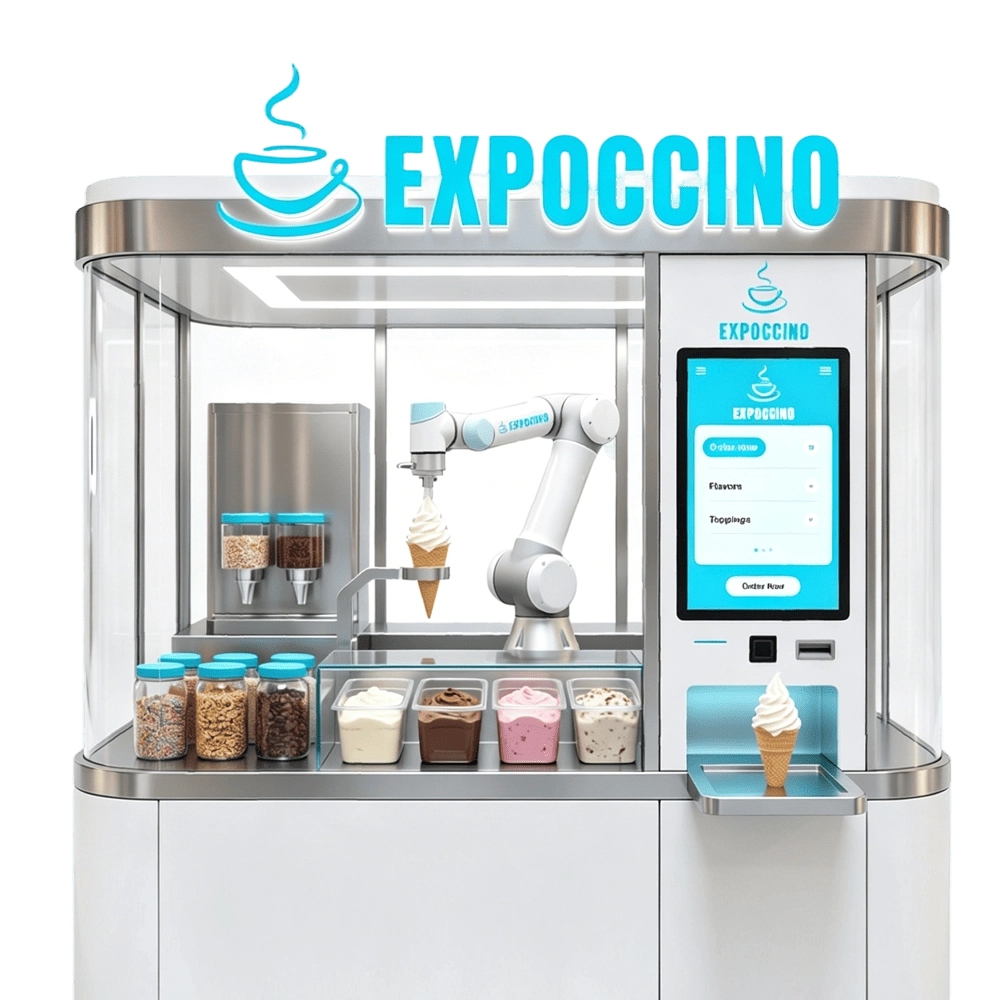
Expoccino Swirl is an AI-powered fancy ice cream robot that delivers ritual-worthy treats in paper cups. Robotic arms replicate handcrafted swirling layers and delicate textures directly inside paper cups, creating eye-catching, Instagram-worthy servings. Choose between classic soft-serve or light, refreshing frozen yogurt for diverse taste preferences.
With a compact 1.5 m² footprint and a 30-inch OLED interactive screen, it enables engaging human-machine interaction, perfect for high-end venues. Operating 24/7 unattended with an energy-efficient and low-maintenance design, it brings delightful frozen treats to customers anytime.
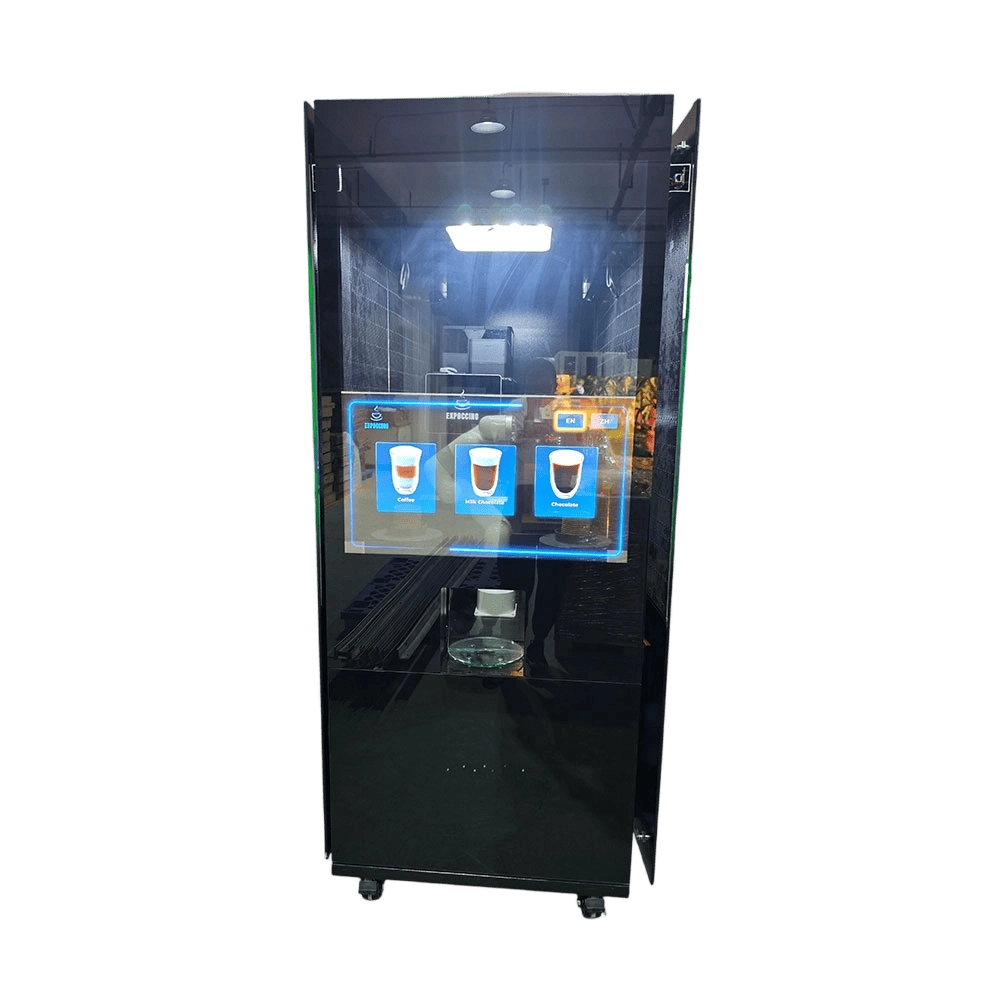
EXPOCCINO creates an immersive, futuristic coffee experience center. More than just a piece of equipment, it is a revenue-generating asset that enhances foot traffic and venue appeal through sophisticated robotic arm interaction and delivery technology, a multilingual user interface, and 24/7 fully unattended operation.
It aligns perfectly with public interest in specialty coffee and artificial intelligence, while helping brands gain extensive visibility, recognition, and market influence.
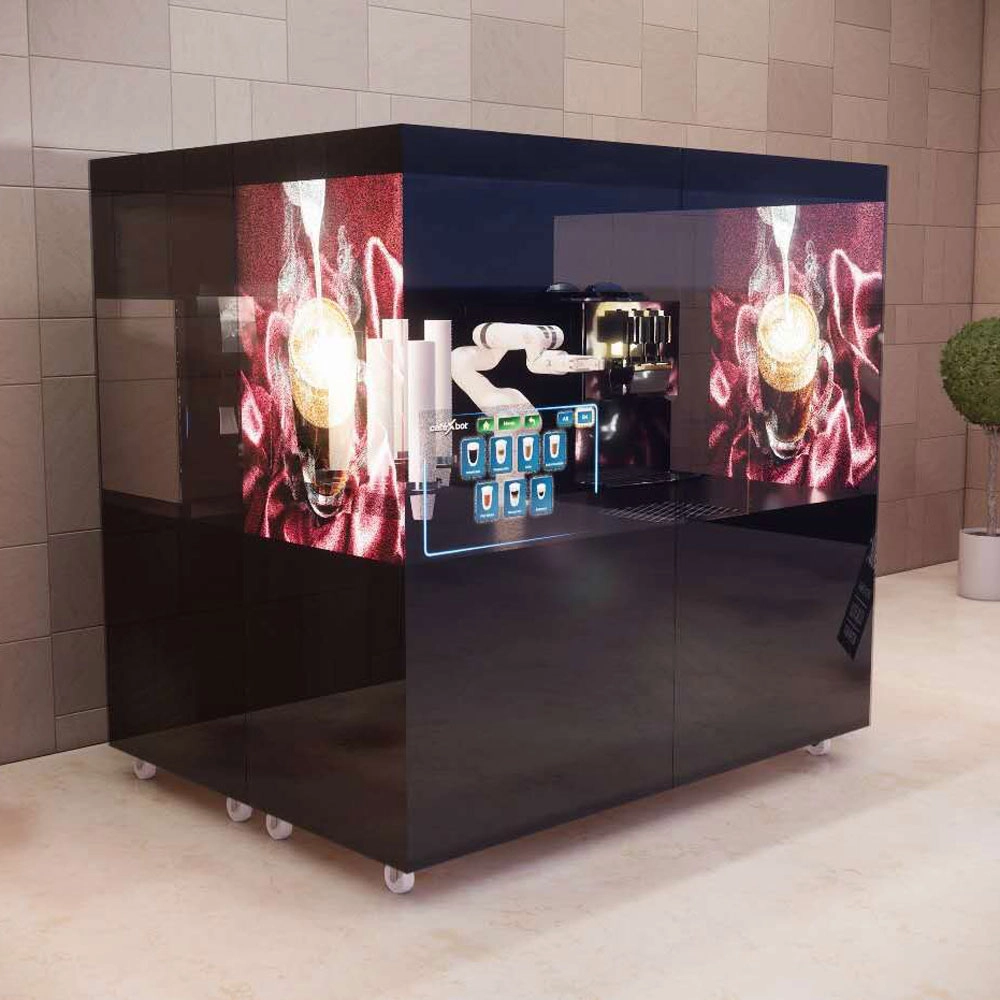
Enjoy doing your business with 100% automation. It is the only robotic kiosk serving multiple products, including hot and iced coffee, hot chocolate, ice cream with toppings, snacks, and tea.
It features a talking robotic kiosk equipped with AI speech recognition. The robot jokes with visitors to attract attention and invite them to buy. Additionally, it is the only robotic kiosk capable of serving up to 4 cups in a single order.
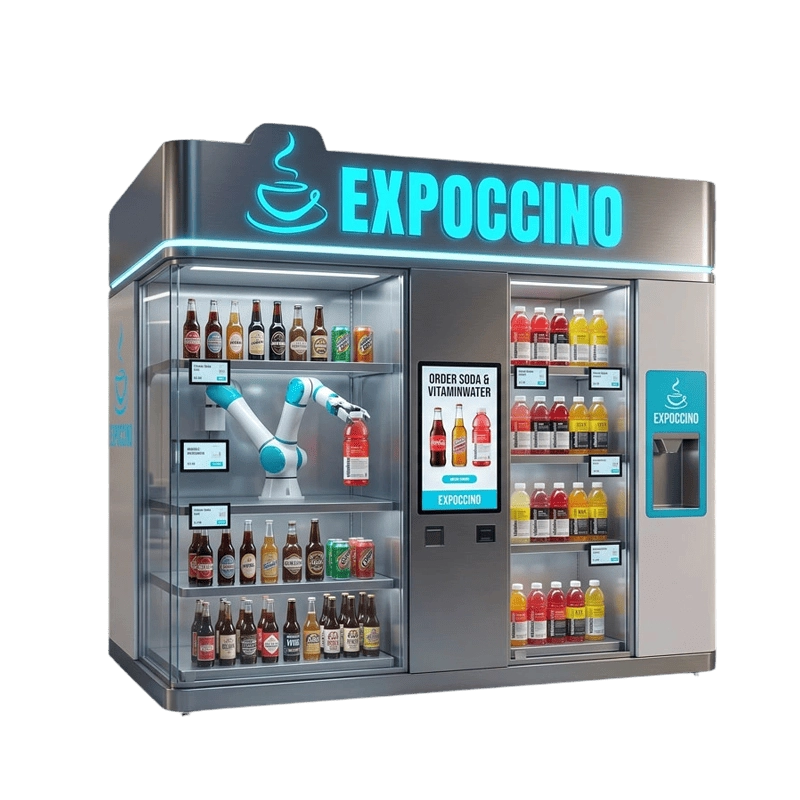
Expoccino Surge, the compact unmanned beverage kiosk, covers less than 5 m². Built with integrated robotic arms and a transparent OLED interactive screen, it offers 24-hour convenient service for everyone.
We carefully source natural fermented fruit & vegetable extracts and multivitamin ingredients, paired with freshly infused bubbles. Zero sugar and preservative-free, our drinks free you from the burden of traditional sugary sodas.
With an acid-resistant design, constant-temperature preservation, and smart cloud management, it is easy to maintain. Its sleek look fits malls, offices, campuses, and scenic spots, bringing healthy sparkling drinks closer to daily life.
Delivering hospitality experiences that reduce costs, boost sponsor value, and drive engagement.
Email: sales@expoccino.com
WhatsApp:+86 137 1745 4543
Tian’an Center, Jihua Dong Rd., Guicheng District, Nanhai, Foshan City, Guangdong Province, China.
 Scan QR Code
Facebook
Linkedin
Instagram
Linkedin
Twitter