
How Much Does an Ice Cream Robot Cost? Price Factors Commercial Buyers Should Know
Commercial ice cream robot systems typically cost between $25,000 and $75,000 for standard standalone units, while fully enclosed interactive kiosks and custom robotic installations range from $80,000 to over $130,000 depending on automated arm precision, ingredient refrigeration technology, point-of-sale integrations, and AI-driven telemetry. Evaluating the true cost requires analyzing not just upfront capital expenditures, but also mechanical throughput, sanitation compliance, power consumption, preventative maintenance contracts, and operational labor reduction across high-traffic retail venues.
Understanding Commercial Investment Tiers for Robotic Frozen Dessert Systems
In my 15 years consulting on food automation and autonomous retail robotics, the single most common question I receive from hospitality executives and franchise operators is how capital expenditure aligns with real-world productivity. A commercial ice cream robot is not simply a soft-serve dispenser with a mechanical novelty arm; it is a precision food-production platform integrating industrial robotics, refrigeration controls, and automated point-of-sale infrastructure. When assessing acquisition costs, I classify systems into three primary tiers: entry-level tabletop units, standalone modular kiosks, and fully autonomous entertainment-grade micro-retail centers.
Entry-Level vs. Enterprise Kiosk Configurations
Entry-level models, typically priced from $25,000 to $45,000, usually incorporate a basic collaborative arm (cobot) mounted beside a standard soft-serve machine. While these lower-cost entries demonstrate proof of concept, they often lack automated cup-dispensing arrays, syrup dosing valves, and multi-axis wrist articulation. By contrast, enterprise-level installations ranging from $50,000 to $90,000 feature industrial-grade delta or articulated 6-axis arms enclosed within food-grade sanitary barriers. According to technical documentation from the International Organization for Standardization regarding industrial robots (ISO 10218-1), safety compliance for collaborative robotic workspaces requires redundant safety stops, torque sensors, and impact detection systems—engineering requirements that directly influence the equipment price tag.
Self-Cleaning Mechanisms and Sanitation Compliance Overhead
A major cost driver that commercial buyers frequently overlook during initial procurement is sanitation automation. Food safety standards outlined by the U.S. Food and Drug Administration mandate rigorous clean-in-place (CIP) and temperature logging protocols for dairy-dispensing machinery. Robotic kiosks equipped with automated CIP cycles, heat-treatment pasteurization, and microbial air filtration systems carry higher price tags—often adding $8,000 to $15,000 to base machine costs. However, in my field assessments across amusement parks and travel hubs, these self-sanitizing systems save operators between two and four hours of daily manual labor, preventing product contamination and mitigating regulatory risks.
Direct Cost Drivers: Hardware, Software, and Physical Footprint
Evaluating hardware components explains why two seemingly identical robotic kiosks carry vastly different quotes. The mechanical heart of any modern robotic dispenser is its multi-axis manipulator. High-reliability harmonic drives, servo motors, and IP65-rated washdown casings ensure continuous operation in sticky, dairy-dense environments without mechanical seizure. Robotic arms manufactured by leaders like KUKA or FANUC demand higher initial investments than unbranded actuators, but their mean time between failures (MTBF) frequently surpasses 50,000 operational hours.
Edge Computing, Vision Systems, and AI Telemetry
The transition from mechanical automation to responsive AI is another pivotal price differentiator. Modern systems employ computer vision to confirm cup placement, detect liquid overflow, monitor topping viscosity, and verify customer engagement in real time. Integrating edge computing modules running neural networks, certified under standards governed by the IEEE for cyber-physical robotics, ensures the robot adapts to fluctuating soft-serve densities caused by temperature variances. Furthermore, cloud-based telemetry platforms that provide remote diagnostics, predictive maintenance alerts, and dynamic inventory tracking generally involve initial software licensing fees ranging from $1,200 to $3,500 annually.
Footprint Requirements and Site Preparation Realities
Beyond purchasing the hardware itself, site adaptation and facility preparation represent significant capital outlay. An automated kiosk typically demands a designated utility footprint: dedicated 208V–240V three-phase electrical connections, pressurized potable water lines, and floor drains for drainage cycles. Installation logistics, freight, municipal permitting, and structural anchoring can easily add $4,000 to $12,000 to your total deployment budget. Failing to factor in these environmental readiness costs leads to unexpected delays and budget overruns during commercial rollout phases.
| Comparison Factor | Traditional Approach | AI-Driven Approach |
|---|---|---|
| Average Labor Cost (Annual per Kiosk) | $45,000 - $65,000 (2-3 Full-Time Shifts) | $4,000 - $8,000 (Maintenance & Restocking Only) |
| Dispensing Consistency & Portion Drift | ±15% to 25% Ingredient Variance | ±1.5% Precise Weight & Extrusion Control |
| Operating Hours & Uptime Capability | 8 - 14 Hours/Day (Constrained by Staffing) | 24 Hours/Day (Continuous Autonomous Service) |
| Diagnostic Response Time | Reactive (Hours to Days After Breakdown) | Proactive (Predictive Telemetry & Real-Time Alerts) |
| Sanitation & CIP Tracking | Manual Logs (Prone to Human Error) | Automated Logging & Certified Heat Treatment |
Return on Investment Models and Operational Expense Reductions
Calculating return on investment requires looking beyond raw sticker prices to analyze lifecycle operating expenses. In high-traffic venues such as shopping centers, cruise terminals, and transit stations, traditional counter service suffers from skyrocketing labor overhead, inconsistent portion control, and employee turnover. An automated food kiosk addresses these friction points directly, shifting the cost equation from variable labor to fixed asset depreciation.
Labor Optimization and Waste Mitigation
In my client financial audits, transitioning from a manually staffed ice cream counter to a robotic dispensing kiosk regularly yields an 80% to 90% reduction in direct operational labor. Because the robot controls soft-serve extrusion with microsecond valve shutoffs, ingredient over-portioning is nearly eliminated. Over an annual operating cycle dispensing 120,000 servings, saving just 0.5 ounces of dairy mix per serving preserves substantial raw inventory value. As detailed in the economic evaluations published by the World Economic Forum on automated commercial retail, intelligent autonomous systems transform traditional service margins by driving near-zero waste outputs.
Lifecycle Depreciation and Service Contracts
A realistic total cost of ownership (TCO) calculation must account for component wear, preventative maintenance kits, and consumable replacement parts. A standard commercial deployment operates on a 5-to-7-year depreciation cycle. Comprehensive service level agreements (SLAs) generally cost between 6% and 10% of the initial machine value per year, covering replacement vacuum grippers, peristaltic pump tubes, sanitation seals, and on-site emergency technician dispatches. Even when factoring in continuous SLA coverage, our commercial clients typically achieve full capital expenditure payback within 12 to 18 months, driven by expanded operating hours and strong novelty-driven customer acquisition.
Expanding Autonomous Foodservice: Comprehensive Robotic Platforms
As commercial buyers evaluate automated dessert solutions, many realize that robotic deployment rarely stops at a single product line. High-volume operators are increasingly expanding their installations into broader self-contained foodservice hubs. In these multi-category deployments, integrating automated kiosks for multiple beverage and dessert formats creates a unified, 24/7 autonomous destination that maximizes foot-traffic monetization.
Beverage automation represents the natural operational counterpart to frozen dessert robotics. Leading brands are deploying modular units that coordinate with our high-throughput robot coffee machine and self-monitoring robot coffee maker solutions. These systems merge identical industrial motion algorithms with precision temperature-controlled water delivery, pressurized extraction, and automatic milk texturing. For venues seeking seamless food and beverage synergy, expanding into robots in restaurants has moved from experimental novelty to an indispensable operational strategy.
Whether you require a dedicated robot espresso machine to capture morning commuter foot traffic or an interactive espresso machine robot that synchronizes its workflow alongside frozen treat dispensing, deploying unified robotic architectures streamlines maintenance contracts and centralizes cloud management. By standardizing component sourcing, operators eliminate redundant training, consolidate backend inventory software, and create efficient, zero-labor micro-cafes that drive exceptional commercial margins.
For detailed architectural specifications, tailored ROI projections, or custom project configurations, contact us to connect with our robotics deployment specialists.
Frequently Asked Questions
How much does an ice cream robot typically cost to purchase?
Turnkey commercial ice cream robots generally cost between $25,000 and $75,000 for standard modular systems, while high-throughput, entertainment-grade enclosed kiosks featuring advanced vision guidance and multi-flavor topping stations can range from $80,000 to $130,000.
What are the primary ongoing operating costs for an automated kiosk?
Routine operational expenses include electricity (typically 208V–240V three-phase power), high-speed internet connectivity for cloud telemetry, dairy and dry topping restocking, consumable wear parts (such as seals and tubing), and annual preventative maintenance contracts, which generally run 6% to 10% of the unit purchase price.
How long does it take for a commercial ice cream robot to reach break-even?
In prime retail, hospitality, or travel hub locations with high pedestrian traffic, most operators achieve break-even within 12 to 18 months. Payback velocity is driven by 24/7 operational capability, near-total elimination of front-line counter labor, and strict ingredient portion control.
What routine maintenance is required to maintain food safety compliance?
Operators must perform daily or bi-weekly automated Clean-In-Place (CIP) pasteurization cycles, refill dairy hopper reservoirs, restock dry toppings and cups, and inspect mechanical seals. Industrial robotic arms require scheduled inspection every 6 to 12 months for lubrication and belt tension calibration.
Can an ice cream robot operate fully unattended without on-site staff?
Yes, modern commercial kiosks are designed to operate completely unattended for point-of-sale ordering, payment processing, dispensing, and customer delivery. Staff presence is only required periodically for loading ingredients, restocking paper goods, and conducting routine sanitation overhauls.
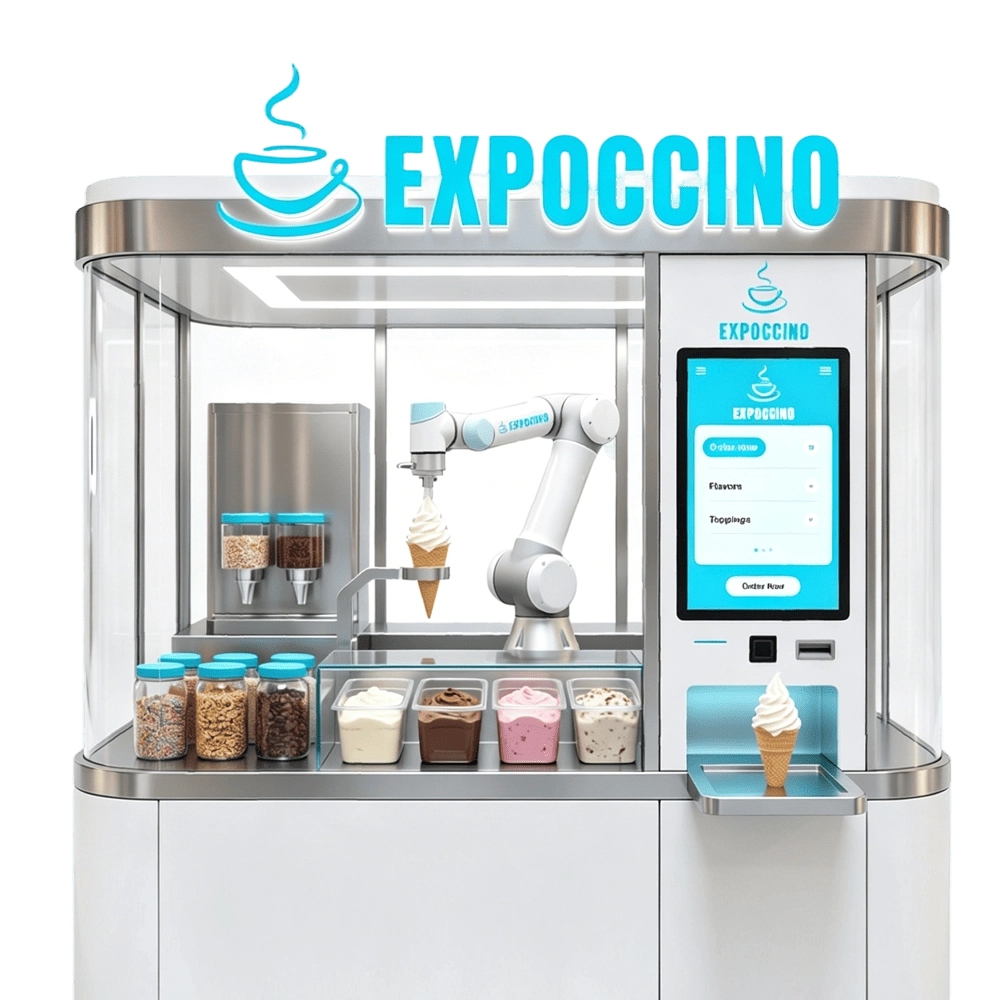
Expoccino Swirl is an AI-powered fancy ice cream robot that delivers ritual-worthy treats in paper cups. Robotic arms replicate handcrafted swirling layers and delicate textures directly inside paper cups, creating eye-catching, Instagram-worthy servings. Choose between classic soft-serve or light, refreshing frozen yogurt for diverse taste preferences.
With a compact 1.5 m² footprint and a 30-inch OLED interactive screen, it enables engaging human-machine interaction, perfect for high-end venues. Operating 24/7 unattended with an energy-efficient and low-maintenance design, it brings delightful frozen treats to customers anytime.
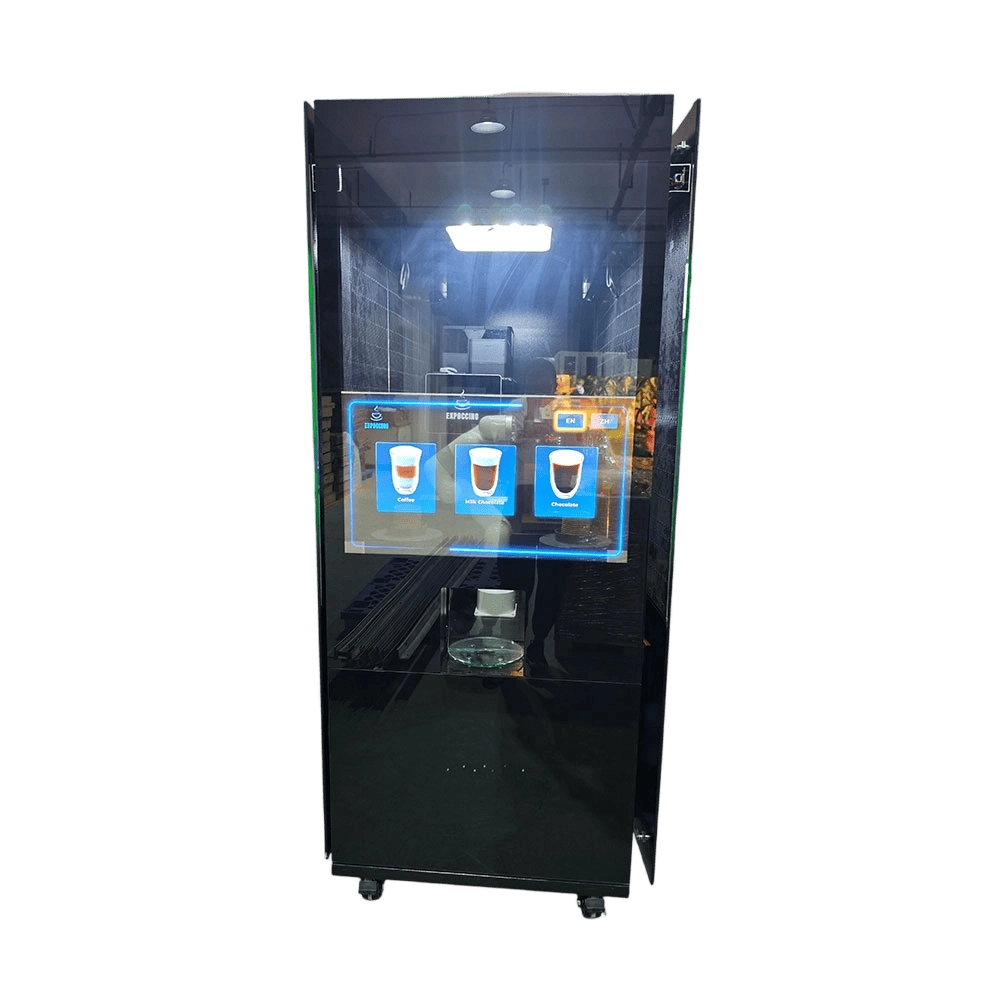
EXPOCCINO creates an immersive, futuristic coffee experience center. More than just a piece of equipment, it is a revenue-generating asset that enhances foot traffic and venue appeal through sophisticated robotic arm interaction and delivery technology, a multilingual user interface, and 24/7 fully unattended operation.
It aligns perfectly with public interest in specialty coffee and artificial intelligence, while helping brands gain extensive visibility, recognition, and market influence.
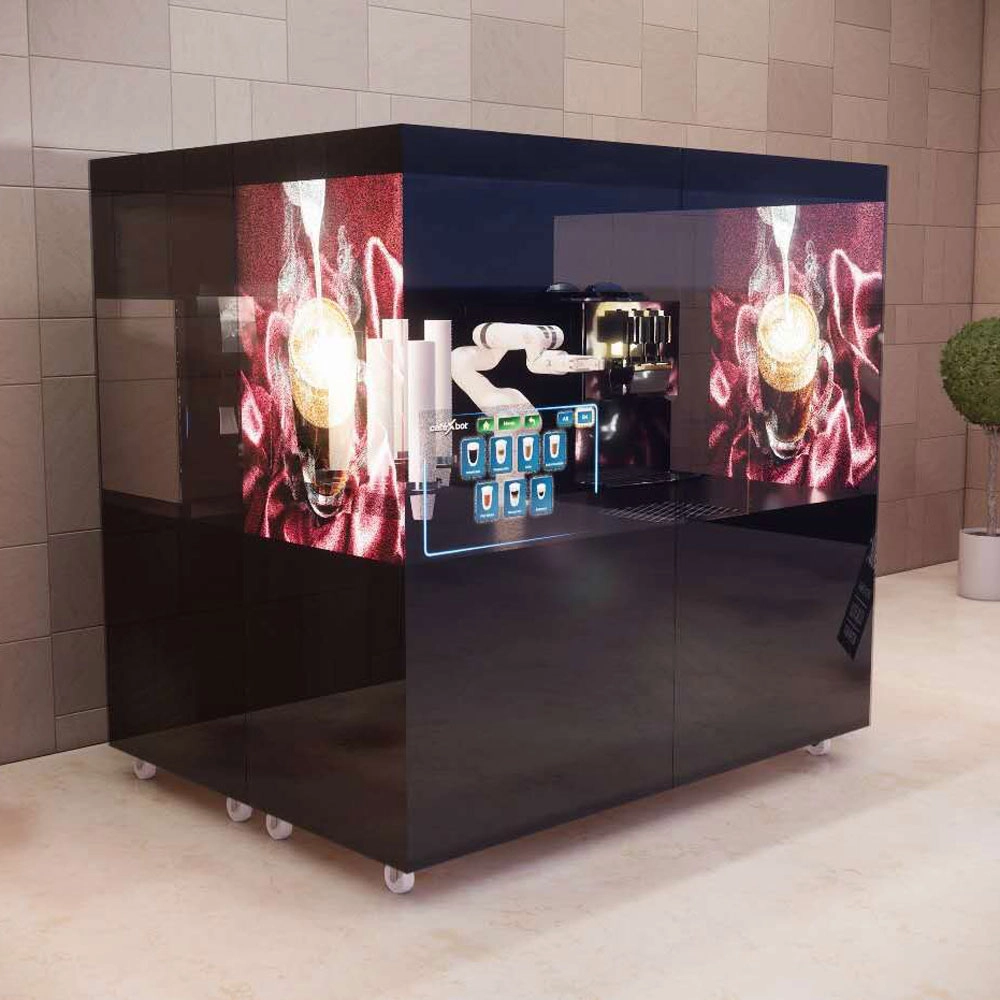
Enjoy doing your business with 100% automation. It is the only robotic kiosk serving multiple products, including hot and iced coffee, hot chocolate, ice cream with toppings, snacks, and tea.
It features a talking robotic kiosk equipped with AI speech recognition. The robot jokes with visitors to attract attention and invite them to buy. Additionally, it is the only robotic kiosk capable of serving up to 4 cups in a single order.
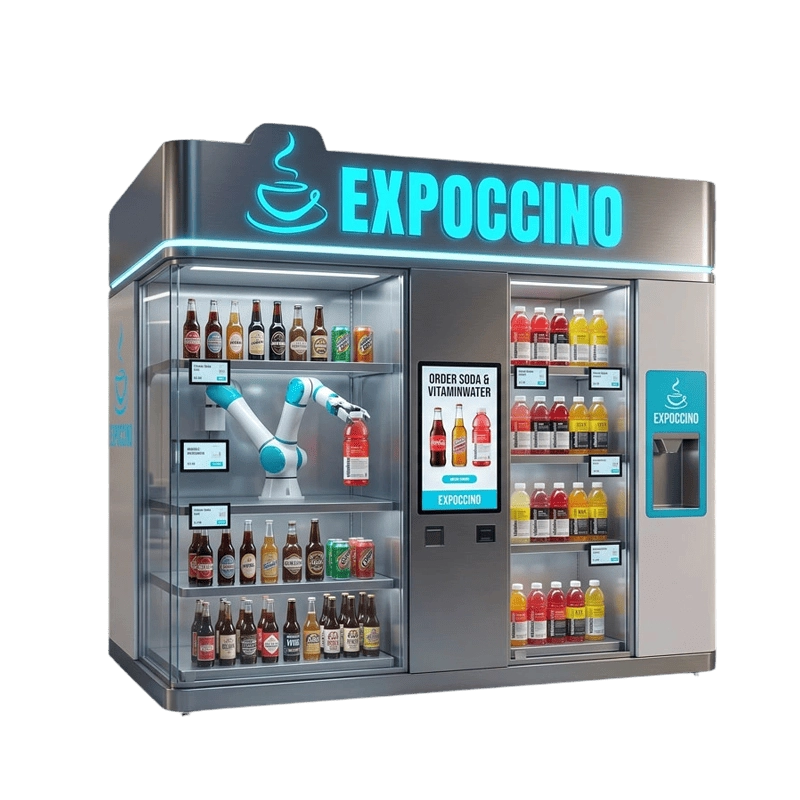
Expoccino Surge, the compact unmanned beverage kiosk, covers less than 5 m². Built with integrated robotic arms and a transparent OLED interactive screen, it offers 24-hour convenient service for everyone.
We carefully source natural fermented fruit & vegetable extracts and multivitamin ingredients, paired with freshly infused bubbles. Zero sugar and preservative-free, our drinks free you from the burden of traditional sugary sodas.
With an acid-resistant design, constant-temperature preservation, and smart cloud management, it is easy to maintain. Its sleek look fits malls, offices, campuses, and scenic spots, bringing healthy sparkling drinks closer to daily life.
Delivering hospitality experiences that reduce costs, boost sponsor value, and drive engagement.
Email: sales@expoccino.com
WhatsApp:+86 137 1745 4543
Tian’an Center, Jihua Dong Rd., Guicheng District, Nanhai, Foshan City, Guangdong Province, China.
 Scan QR Code
Facebook
Linkedin
Instagram
Linkedin
Twitter