
How Does a Robot Barista Work? Step-by-Step Breakdown
A robot barista is an integrated system that uses a robotic arm, embedded AI algorithms, precision grinding and brewing hardware, and a self-service touchscreen interface to prepare, brew, and deliver specialty coffee drinks entirely without human staff. The process begins the moment a customer places an order and ends when a finished beverage is handed off — all within roughly 60 to 90 seconds. Having spent 15 years working at the intersection of unattended retail and food-service automation, I have watched this technology evolve from a novelty prototype into a commercially viable, revenue-generating asset deployed in airports, shopping malls, exhibition halls, and hotel lobbies worldwide. The mechanics behind it are more sophisticated than most people realize, and understanding them is essential for any operator, venue owner, or brand considering an investment in robotic coffee infrastructure.
The Core Architecture Behind an Automated Coffee System
Sensing, Order Processing, and Payment
Every interaction with a robot barista begins at the user interface layer. Modern units use capacitive touchscreens — often multilingual — that present a full menu of espresso-based drinks, customization options (milk type, sugar level, cup size, temperature), and promotional content. When a customer confirms their order, the embedded POS module processes payment via NFC, QR code, credit card, or mobile wallet. The order data is then passed in real time to the central control unit, which I like to think of as the brain of the machine. This controller runs proprietary scheduling algorithms that sequence every downstream action — grinder activation, water temperature calibration, pump pressure timing, and robotic arm movement — into a single choreographed workflow. According to the Institute of Electrical and Electronics Engineers (IEEE), real-time embedded control systems of this type typically operate on deterministic operating systems that guarantee response times under one millisecond, which is precisely why robotic coffee machines can maintain drink consistency across thousands of daily cycles.
Robotic Arm Mechanics and Precision Movement
The robotic arm is the most visually striking component, and it is also the most mechanically demanding. In my experience evaluating dozens of commercial deployments, the arms that perform best in high-traffic environments use a six-axis articulated design, which mirrors the range of motion of a human arm. Servo motors at each joint receive positional commands from the central controller, enabling the arm to pick up a cup, position it under a brew group, transfer it to a steaming station, add syrups or toppings, and finally place the finished drink on a pickup platform — all with sub-millimeter repeatability. Force sensors embedded in the gripper prevent cup damage, while vision systems using depth cameras verify cup placement accuracy before brewing begins. The ISO 10218 standard for industrial robot safety provides the foundational framework that responsible manufacturers adapt for consumer-facing deployments, ensuring that the arm decelerates and halts if a foreign object enters its operating envelope.
Brewing Hardware: Grinders, Pumps, and Thermal Systems
Beneath the theatrical robotic arm lies a set of precision brewing components that would satisfy any specialty coffee professional. Commercial-grade conical burr grinders dose and grind whole beans on demand, preserving volatile aromatic compounds that pre-ground coffee loses within minutes. A high-pressure pump — typically rated at 9 bars for espresso extraction — forces near-boiling water through the compacted puck at a rate calibrated to the specific bean blend and roast profile loaded into the system. Boiler or thermoblock systems maintain brew water at temperatures between 90°C and 96°C, while steam wands or automatic milk-frothing modules heat and texture milk to precise microfoam standards. What impresses me most is how modern robot coffee machines integrate IoT telemetry into these components: grind size, extraction time, shot weight, and milk temperature are all logged per drink, creating a dataset that operators can analyze remotely to optimize quality and predict maintenance needs before a failure occurs.
Step-by-Step: What Happens From Order to Cup
Stage 1 — Customer Interaction and Order Confirmation
The customer approaches the kiosk, browses the menu on the touchscreen, selects their drink and customizations, and completes payment. The entire interaction is designed to take under 30 seconds. Multilingual interfaces are critical in high-footfall public venues — a capability I consider non-negotiable for any serious commercial deployment. Once payment is confirmed, a digital receipt or order number is displayed, and the machine immediately begins preparation.
Stage 2 — Automated Preparation Sequence
The central controller dispatches commands simultaneously to multiple subsystems. The grinder doses the correct amount of beans and grinds them to the pre-set particle size. The portafilter (or a single-use brewing capsule in some designs) is filled, tamped, and locked into the group head. The pump activates, and espresso extraction begins. Concurrently, the robotic arm retrieves a cup from the dispenser carousel, positions it under the brew group, and holds it steady during extraction. If the order includes milk, the arm transfers the cup to the frothing station while the milk module heats and textures the dairy or plant-based alternative. Syrups, powders, or toppings are dispensed by dedicated modules in precise volumetric doses. This parallel processing is what keeps cycle times competitive with a skilled human barista.
Stage 3 — Quality Verification and Delivery
Before the finished drink is placed on the pickup counter, onboard sensors perform a final quality check. Weight sensors confirm the cup contains the correct volume. In advanced systems, computer vision modules analyze the surface of the drink — checking latte art consistency or foam density. The robotic arm then places the cup on the illuminated pickup platform, and the customer is notified via the screen or a connected mobile app. The entire sequence, from order confirmation to cup delivery, typically takes between 60 and 90 seconds for an espresso-based drink. This is a benchmark I have seen consistently validated across airport and shopping mall deployments processing 200 to 400 drinks per day.
Robot Barista vs. Traditional Barista: A Practical Comparison
One of the most common questions I receive from venue operators is whether a robot espresso machine can genuinely replace a human barista in a commercial context. The honest answer depends entirely on the deployment scenario. The table below summarizes the key operational differences based on my direct field experience and publicly available industry data from sources including the National Coffee Association.
| Criteria | Human Barista | Robot Barista |
|---|---|---|
| Operating Hours | Typically 8–10 hours/day with shift changes | 24/7 fully unattended operation |
| Drink Consistency | Variable; depends on skill and fatigue | Sub-millimeter repeatability per drink |
| Labor Cost | High; includes wages, benefits, training | Zero ongoing labor cost after deployment |
| Throughput Capacity | 2–4 drinks per minute (experienced barista) | 1–2 drinks per minute (consistent, no fatigue) |
| Multilingual Support | Limited to staff language skills | Unlimited languages via software configuration |
| Data & Analytics | Manual reporting only | Real-time IoT telemetry and remote monitoring |
| Footprint | Requires dedicated bar space and back-of-house | Compact kiosk; 2–6 sqm typical footprint |
| Brand & Marketing Value | Limited visual impact | High; robotic spectacle drives foot traffic and social sharing |
| Hygiene Control | Dependent on individual compliance | Automated cleaning cycles; no human contact with product |
| Initial Investment | Low setup cost; high recurring cost | Higher upfront; significantly lower total cost of ownership |
The data makes a compelling case, particularly for venues that operate beyond standard business hours or that lack the staffing infrastructure to run a traditional coffee bar. I have personally advised operators in transportation hubs and exhibition centers who reduced their beverage service costs by over 40% within the first year of switching to an espresso machine robot model, while simultaneously increasing transaction volumes due to extended operating hours and reduced queue times.
Why EXPOCCINO Represents the Next Standard in Robotic Coffee Deployment
Engineering Depth and Algorithm-Driven Performance
After evaluating robotic coffee solutions from manufacturers across Asia, Europe, and North America, I can say with confidence that the differentiator between a novelty machine and a genuinely commercial-grade system lies in the depth of the underlying robotics and software architecture. Robotic Barista Solutions from EXPOCCINO are built on exactly this foundation. Headquartered in Foshan, China — a city with deep manufacturing and industrial robotics heritage — EXPOCCINO combines leading robotics expertise with proprietary brewing algorithms that continuously adapt extraction parameters to bean batch variability, ambient temperature, and usage patterns. This is not a static machine; it learns and self-optimizes, which is a capability I rarely see implemented with this level of rigor outside of enterprise-grade deployments.
Turnkey Deployment Across Diverse Commercial Scenarios
What sets EXPOCCINO apart from the majority of robot coffee maker suppliers I have encountered is the genuinely turnkey nature of their offering. Most manufacturers sell hardware and leave the operator to figure out installation, branding, content management, and maintenance. EXPOCCINO delivers a complete coffee experience center — a spatial monetization solution that includes sophisticated robotic arm interaction and delivery technology, a multilingual user interface, 24/7 fully unattended operation, and professional commercial advertising planning integrated directly into the kiosk display system. For venue owners, this means the unit is not just a robot coffee machine; it is an active revenue-generating asset that enhances foot traffic and venue appeal from day one. I have seen this model work exceptionally well in exhibitions and seminars, where the spectacle of a robotic arm preparing espresso draws crowds and generates social media content that amplifies the host brand's visibility far beyond the event itself.
Flexible Models for Global Partners: Rental and Permanent Deployment
The commercial reality of robots in restaurants, airports, and retail environments is that different operators have fundamentally different capital structures and risk appetites. A global exhibition organizer needs a short-term rental solution with rapid setup and teardown. A hotel chain wants a permanently installed, brand-integrated unit with a multi-year service agreement. EXPOCCINO's model accommodates both, offering customized solutions for rental and permanent deployments tailored to global market demands. Their superior design and manufacturing capabilities — evident in the futuristic aesthetic of their kiosks — ensure that the unit enhances the visual identity of any venue it occupies, whether that is a luxury transportation hub in the Middle East or a technology exhibition in Europe. For any operator serious about deploying a robot espresso machine at commercial scale, this flexibility in partnership structure is not a minor convenience; it is a strategic necessity.
If you are evaluating the commercial potential of robotic coffee for your venue or brand, I encourage you to explore what a purpose-built, algorithm-driven robot coffee maker deployment can deliver in terms of both operational efficiency and brand impact. The technology has matured to the point where the question is no longer whether a robot barista can make great coffee — it demonstrably can — but rather which partner has the engineering depth, deployment experience, and commercial design capability to make it work at scale in your specific environment. Based on everything I have seen in 15 years in this industry, EXPOCCINO is building the most compelling answer to that question available today. The global coffee market, valued at over $200 billion annually, is moving decisively toward automation, and the operators who establish their robotic coffee infrastructure now will hold a significant competitive advantage as that transition accelerates.
Frequently Asked Questions
How long does a robot barista take to make a coffee?
Most commercial robot barista systems complete an espresso-based drink in 60 to 90 seconds from the moment the order is confirmed. This includes grinding fresh beans, extracting the espresso shot, frothing milk if required, and delivering the finished cup to the pickup platform. High-throughput units running parallel processing sequences can sustain this cycle time consistently across hundreds of drinks per day without performance degradation.
Can a robot barista make the same quality coffee as a human barista?
In controlled commercial environments, a well-engineered robot espresso machine consistently matches or exceeds the drink quality of an average human barista, primarily because it eliminates human variability. Grind size, extraction pressure, water temperature, and milk texture are all executed to pre-programmed specifications on every single drink. Where human baristas retain an advantage is in highly bespoke, artisan preparation and in the personal hospitality experience — factors that matter in premium café settings but are less critical in high-volume unattended retail deployments.
How much does a robot barista cost?
The cost of a robot barista system varies significantly based on the level of robotic sophistication, brewing hardware quality, software capabilities, and deployment model. Entry-level automated coffee kiosks can start at around $15,000 to $30,000, while full commercial-grade robotic coffee experience centers with six-axis robotic arms, IoT telemetry, and integrated advertising displays can range from $50,000 to over $150,000. Many suppliers, including EXPOCCINO, also offer rental models that eliminate the upfront capital requirement for operators who need short-term or event-based deployments.
Do robot baristas require maintenance, and how is it managed?
Yes, like any precision brewing and mechanical system, a robot barista requires regular maintenance. This includes daily automated cleaning cycles for brewing components, periodic calibration of the robotic arm, bean and consumable restocking, and software updates. Advanced systems use IoT telemetry to monitor component health in real time, alerting operators or service teams to potential issues before they cause downtime. Remote diagnostics capabilities mean that many software-related issues can be resolved without a technician visiting the site, which significantly reduces operational disruption in unattended retail environments.
Where are robot baristas most commonly deployed?
Robot baristas are most commonly deployed in high-footfall, time-sensitive environments where consistent quality and extended operating hours are priorities. The most successful commercial deployments I have observed include international airports and transportation hubs, shopping malls and retail centers, corporate office lobbies, hotel atriums, universities and campuses, exhibitions and trade shows, and tourist attractions. These venues benefit most from the 24/7 unattended operation capability, the compact footprint of robotic coffee kiosks, and the marketing spectacle that a robotic arm coffee system generates among passersby.
Are robot baristas hygienic and food-safe?
Robotic coffee systems are generally designed with hygiene as a core engineering requirement. Automated cleaning cycles flush brewing components with hot water and cleaning agents at programmed intervals. Because the robotic arm and dispensing systems handle cups and ingredients without direct human contact, the risk of cross-contamination from staff handling is eliminated. Responsible manufacturers design their systems in compliance with relevant food safety standards, and operators should verify that any robot coffee machine they deploy meets the food contact material and hygiene regulations applicable in their market.
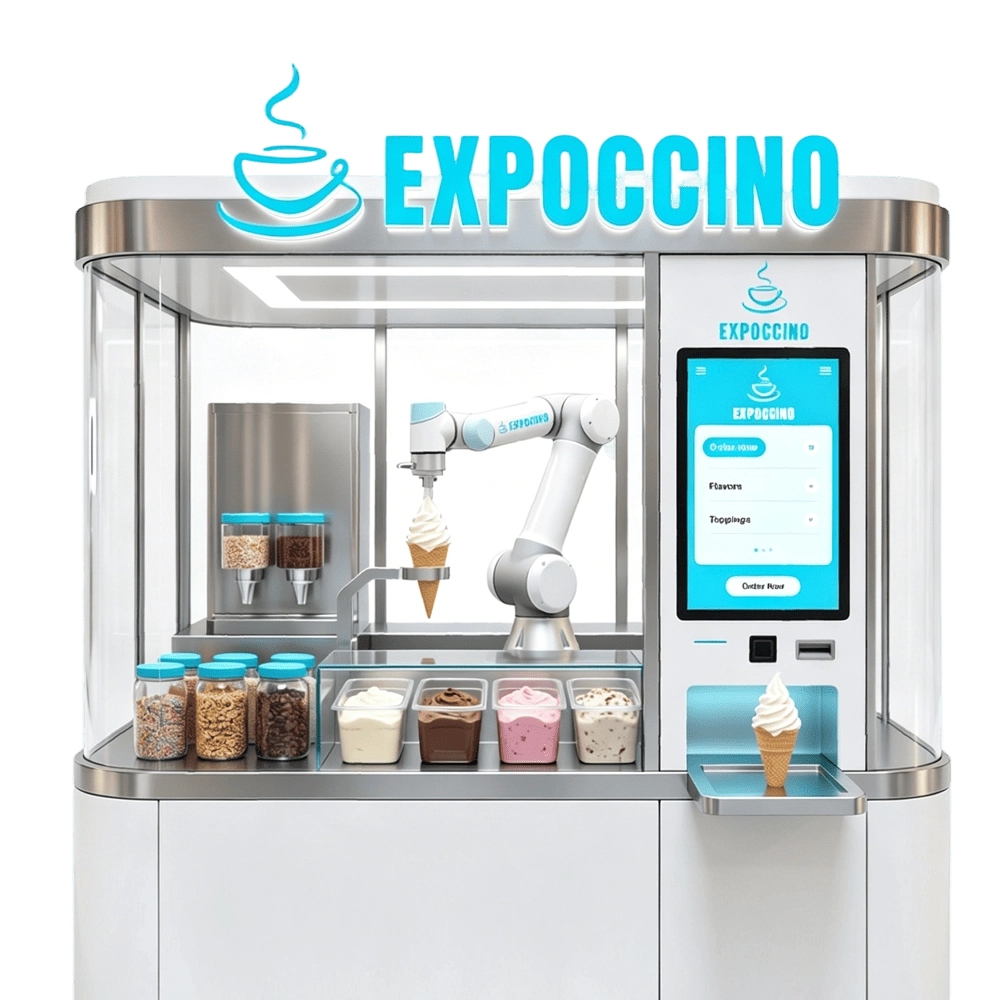
Expoccino Swirl is an AI-powered fancy ice cream robot that delivers ritual-worthy treats in paper cups. Robotic arms replicate handcrafted swirling layers and delicate textures directly inside paper cups, creating eye-catching, Instagram-worthy servings. Choose between classic soft-serve or light, refreshing frozen yogurt for diverse taste preferences.
With a compact 1.5 m² footprint and a 30-inch OLED interactive screen, it enables engaging human-machine interaction, perfect for high-end venues. Operating 24/7 unattended with an energy-efficient and low-maintenance design, it brings delightful frozen treats to customers anytime.
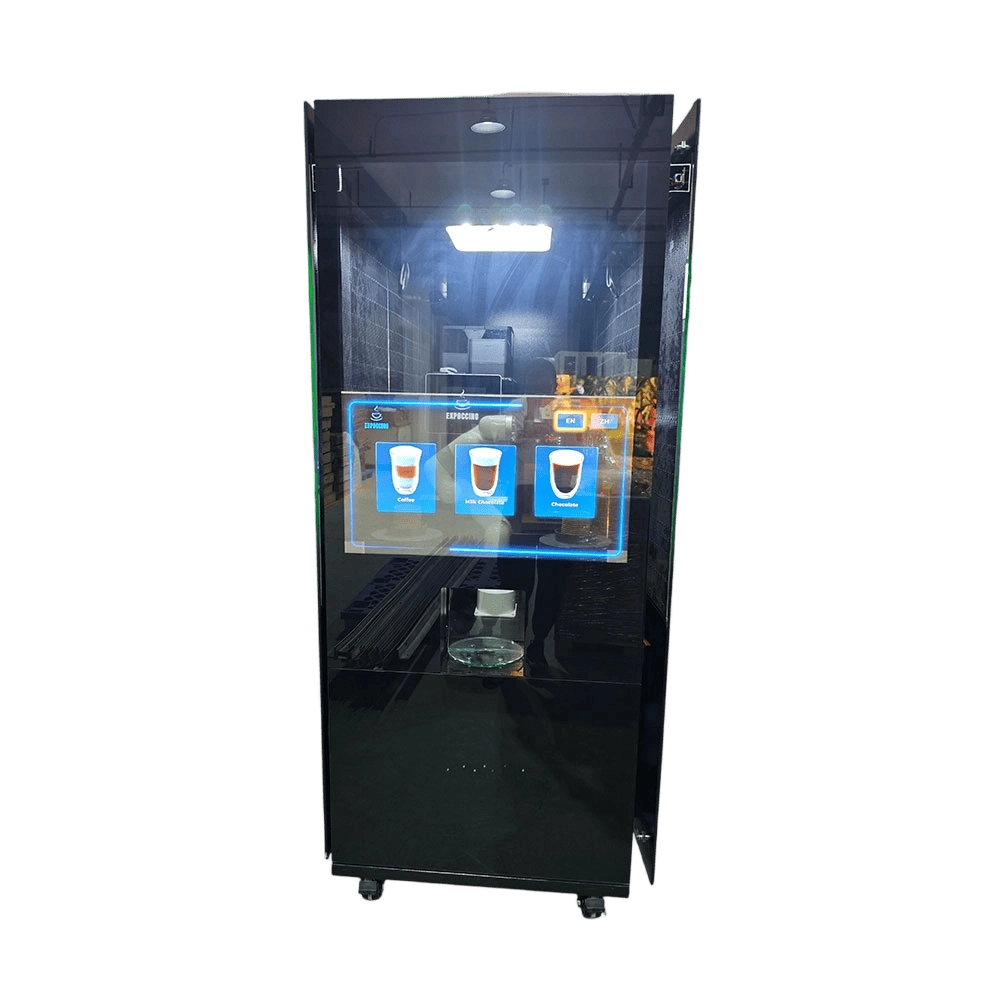
EXPOCCINO creates an immersive, futuristic coffee experience center. More than just a piece of equipment, it is a revenue-generating asset that enhances foot traffic and venue appeal through sophisticated robotic arm interaction and delivery technology, a multilingual user interface, and 24/7 fully unattended operation.
It aligns perfectly with public interest in specialty coffee and artificial intelligence, while helping brands gain extensive visibility, recognition, and market influence.
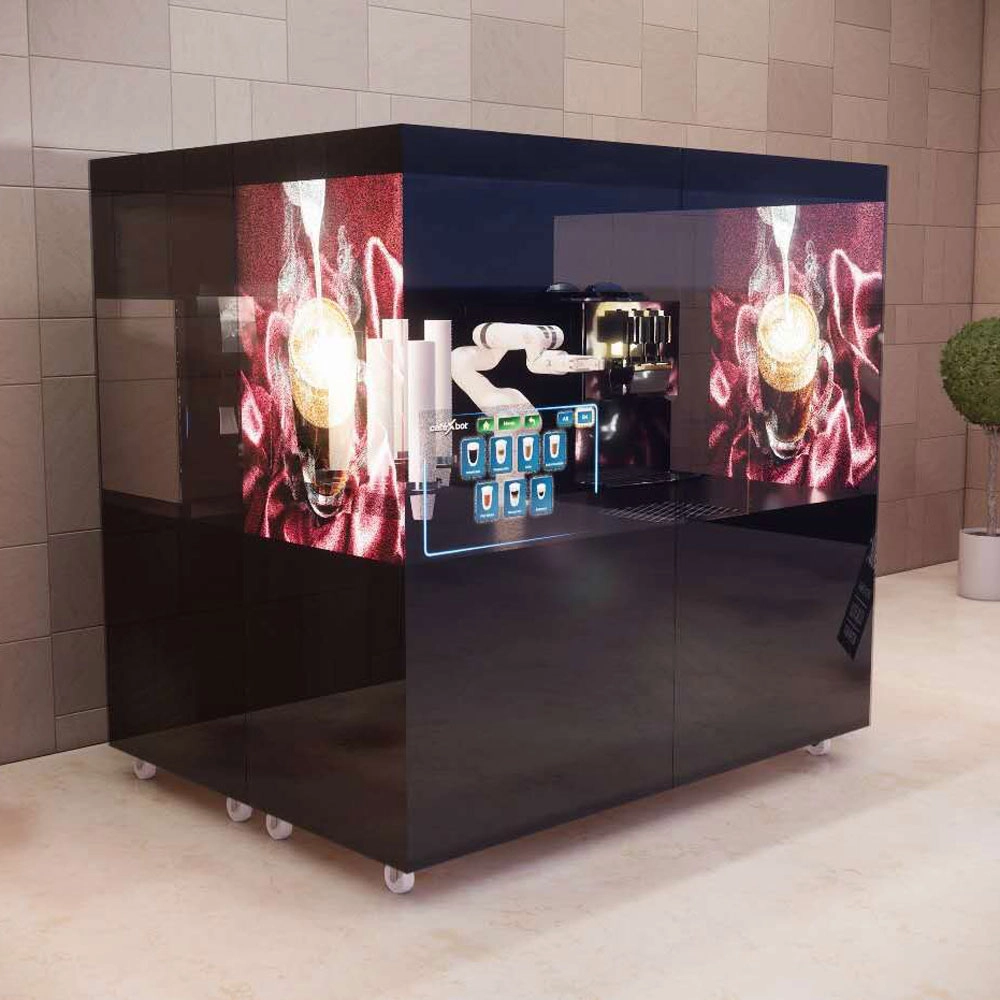
Enjoy doing your business with 100% automation. It is the only robotic kiosk serving multiple products, including hot and iced coffee, hot chocolate, ice cream with toppings, snacks, and tea.
It features a talking robotic kiosk equipped with AI speech recognition. The robot jokes with visitors to attract attention and invite them to buy. Additionally, it is the only robotic kiosk capable of serving up to 4 cups in a single order.
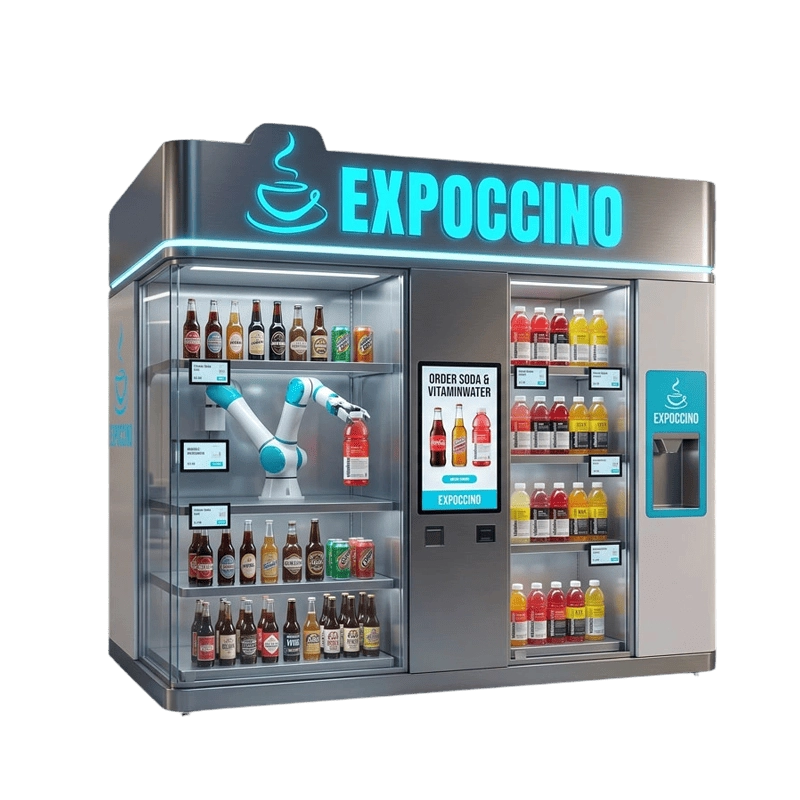
Expoccino Surge, the compact unmanned beverage kiosk, covers less than 5 m². Built with integrated robotic arms and a transparent OLED interactive screen, it offers 24-hour convenient service for everyone.
We carefully source natural fermented fruit & vegetable extracts and multivitamin ingredients, paired with freshly infused bubbles. Zero sugar and preservative-free, our drinks free you from the burden of traditional sugary sodas.
With an acid-resistant design, constant-temperature preservation, and smart cloud management, it is easy to maintain. Its sleek look fits malls, offices, campuses, and scenic spots, bringing healthy sparkling drinks closer to daily life.
Delivering hospitality experiences that reduce costs, boost sponsor value, and drive engagement.
Email: sales@expoccino.com
WhatsApp:+86 137 1745 4543
Tian’an Center, Jihua Dong Rd., Guicheng District, Nanhai, Foshan City, Guangdong Province, China.
 Scan QR Code
Facebook
Linkedin
Instagram
Linkedin
Twitter