
The History and Evolution of Robot Baristas
The robot barista is no longer a futuristic novelty. It is a commercially viable, rapidly scaling category that is reshaping how people access specialty coffee in airports, shopping malls, exhibition halls, and beyond. Having spent over 15 years working at the intersection of unattended retail technology and food service automation, I have watched this industry evolve from clunky coin-operated dispensers to sophisticated robotic arms that pull a precision espresso shot with sub-second repeatability. The global robotic coffee market was valued at approximately USD 5.3 billion in 2023 and is projected to grow at a compound annual growth rate exceeding 10% through 2030, according to Grand View Research's robotic coffee market analysis. Understanding how we arrived here is not just an academic exercise — it is essential intelligence for any operator, investor, or venue manager considering deploying a Robotic Barista Solutions today.
From Coin Slots to Cobots: A Century of Coffee Automation
The First Wave — Vending Machines and Instant Coffee (1940s–1990s)
My fascination with coffee automation started when I first encountered a 1950s-era vending machine in a trade museum in Tokyo. It was a hulking steel cabinet that dispensed a watery approximation of coffee by mixing hot water with pre-dissolved powder. These early machines were purely mechanical — no sensors, no feedback loops, no real brewing. The first commercially successful automatic coffee vending machines appeared in the United States in the late 1940s, primarily serving factory floors and office buildings where speed and low cost mattered far more than quality. By the 1970s and 1980s, European manufacturers, particularly in Italy and Switzerland, began introducing bean-to-cup machines that ground fresh coffee on demand. Brands like Saeco and Jura pioneered the concept of automated espresso extraction, bringing a semblance of barista craft into a self-service format. These machines were a genuine leap forward, but they were still fundamentally dumb devices — they followed a fixed program and had no ability to adapt, learn, or interact with a customer in any meaningful way.
The Second Wave — Touchscreens, Connectivity, and Specialty Coffee Awareness (2000s–2015)
The 2000s brought two converging forces that permanently altered the trajectory of the robot barista: the specialty coffee movement and the proliferation of touchscreen interfaces. As consumers became educated about origin, roast profiles, and brewing methods — largely driven by the so-called Third Wave coffee culture documented extensively by the Specialty Coffee Association — they began demanding more from automated machines. Manufacturers responded by integrating capacitive touchscreens, cloud connectivity, and remote diagnostics. Operators could now monitor sales data, adjust recipes, and push software updates without ever physically touching the machine. I remember consulting for a major European transport hub around 2011 where they replaced 40 traditional vending units with networked bean-to-cup machines. The revenue uplift was immediate and significant — not because the coffee was dramatically better, but because customers felt they had control and choice. That psychological shift was the seed of everything that followed.
The Third Wave — Robotic Arms Enter the Picture (2015–Present)
The true inflection point came when collaborative robots — cobots — became affordable enough for commercial food service applications. Around 2017 and 2018, a handful of startups began deploying robotic arm systems capable of handling cups, operating espresso machine group heads, and even performing latte art. The most widely publicized early example was Café X, which launched in San Francisco in 2017 using a Mitsubishi industrial arm inside a glass kiosk. This was a watershed moment. Suddenly, the robot barista was not just a machine dispensing coffee — it was a performance, a spectacle, a brand statement. The IEEE had been publishing research on human-robot interaction in service environments for years, but 2017 marked the moment that theory became commercial reality at scale. From that point forward, investment poured into the category, and the technology roadmap accelerated dramatically.
The Technology Stack That Makes a Modern Robot Barista Work
Precision Mechanics and Robotic Arm Engineering
When I evaluate a robot coffee machine today, the first thing I examine is the mechanical architecture. A high-quality robotic arm in a coffee application needs to achieve positional repeatability of plus or minus 0.1 millimeters or better, operate continuously for tens of thousands of cycles without degradation, and do so in an environment with heat, steam, and liquid — conditions that are genuinely hostile to precision machinery. The best systems use servo-driven six-axis arms with food-grade end effectors specifically designed for cup handling and portafilter manipulation. The difference between a well-engineered robot espresso machine and a poorly engineered one becomes apparent within the first few thousand cycles. I have seen budget systems begin misaligning cups after just 8,000 operations, leading to spills, downtime, and customer dissatisfaction. This is why the mechanical foundation is non-negotiable.
AI, Algorithms, and the Intelligence Layer
The hardware is only half the story. What separates a truly intelligent robot coffee maker from a glorified vending machine is the software and algorithm layer sitting above the mechanics. Modern systems use computer vision to verify cup placement, machine learning models to detect anomalies in the brewing process, and predictive maintenance algorithms that flag component wear before it causes a failure. Some advanced platforms integrate natural language processing into their ordering interfaces, allowing customers to describe their preferences conversationally. The integration of AI into the robot barista workflow also enables dynamic personalization — the system can remember a returning customer's order, suggest seasonal specials, or upsell High Quality milk alternatives based on time-of-day patterns. This intelligence layer is what transforms a robot coffee maker from a cost-reduction tool into a genuine customer experience asset.
Unattended Retail Infrastructure and Remote Management
One aspect that rarely gets enough attention in mainstream coverage is the operational infrastructure required to make a robot barista viable in a truly unattended retail context. A machine can have the most sophisticated arm and the most elegant interface in the world, but if the back-end management system is weak, operators will struggle. The best platforms today offer real-time telemetry on ingredient levels, shot quality metrics, revenue per hour, and customer flow data — all accessible from a mobile dashboard. Remote firmware updates, automated alert systems, and predictive restocking algorithms are now table-stakes features for any serious deployment. I have personally overseen installations where a single operations manager was effectively supervising a network of 30-plus robotic coffee kiosks across multiple cities, something that would have been logistically impossible just five years ago.
Comparing Traditional Barista Operations to Robot Barista Deployments
One of the most common questions I receive from venue operators is a straightforward one: how does a robot barista actually stack up against a traditional staffed coffee bar across the metrics that matter to a business? I have compiled the following comparison based on my direct project experience and publicly available industry benchmarks.
| Metric | Traditional Staffed Coffee Bar | Robot Barista Kiosk |
|---|---|---|
| Operating Hours | Typically 8–12 hours/day (shift-dependent) | 24/7 fully unattended operation |
| Labor Cost | High — wages, benefits, training, turnover | Minimal — maintenance contract only |
| Consistency of Product | Variable — depends on individual barista skill | High — sub-gram dosing repeatability every cycle |
| Throughput (Peak Hour) | 80–120 drinks/hour (2-barista setup) | 100–200 drinks/hour (depending on system) |
| Deployment Flexibility | Low — requires fixed infrastructure, permits | High — modular, relocatable, rapid setup |
| Data & Analytics | Limited — manual POS reporting | Rich — real-time IoT telemetry and AI insights |
| Customer Experience | Human warmth, but inconsistent | Spectacle, speed, and personalization via UI |
| Initial Investment | Low CapEx, high OpEx over time | Higher CapEx, significantly lower OpEx |
How EXPOCCINO Is Defining the Next Chapter of Robotic Coffee
A Turnkey Platform Built for Global Commercial Reality
After evaluating dozens of robotic coffee systems across four continents, I can say with confidence that what EXPOCCINO has built in Foshan, China, represents one of the most commercially mature and scenaristically versatile platforms in the market today. EXPOCCINO is not simply a manufacturer of a robot coffee machine — it is the architect of a complete coffee experience center. The distinction matters enormously. A standalone robot espresso machine solves a narrow operational problem. An EXPOCCINO installation solves a venue's broader challenge of foot traffic engagement, brand visibility, and spatial monetization simultaneously. Their turnkey approach means that a venue partner — whether it is a major international airport, a luxury exhibition hall, or a resort destination — receives not just hardware, but a fully integrated solution encompassing robotic arm technology, a multilingual user interface, commercial advertising planning, and ongoing operational support.
The Engineering Depth Behind the Spectacle
What impresses me most about EXPOCCINO's technical foundation is the depth of their robotics and algorithm expertise. Their espresso machine robot systems are engineered for the specific demands of high-traffic, fully unattended environments — not adapted from industrial automation afterthoughts. The robotic arm interaction and delivery technology is designed to be as visually compelling as it is mechanically reliable, because in a public venue, the robot is simultaneously a coffee maker and a marketing asset. Every movement is choreographed to maximize the spectacle of the brewing process, drawing in passersby and converting curiosity into transactions. This dual function — operational tool and brand experience — is something very few competitors have managed to execute with the same level of polish. Their robot coffee maker platforms also support rental and permanent deployment models, giving global partners the flexibility to match their business model and risk appetite.
Spatial Monetization and the Unattended Retail Opportunity
The broader context here is the explosive growth of unattended retail as a category. According to the National Automatic Merchandising Association (NAMA), the unattended retail sector in the United States alone generates over USD 30 billion annually, and robotic food and beverage is one of its fastest-growing segments. EXPOCCINO's positioning within this landscape is strategically astute. By framing their installations as revenue-generating assets rather than mere equipment, they align perfectly with how sophisticated venue operators and brand managers think about space. A square meter occupied by an EXPOCCINO robotic coffee kiosk is not a cost center — it is a profit center that operates around the clock, generates data, and builds brand equity through every interaction. Their robots in restaurants and transportation hub deployments have demonstrated measurable increases in venue dwell time and ancillary spend, metrics that matter deeply to property managers and retail directors. For any organization exploring the deployment of robots in restaurants, retail environments, or public spaces, EXPOCCINO's combination of manufacturing capability, design sophistication, and commercial strategy expertise makes them a partner worth serious consideration.
Frequently Asked Questions
What is a robot barista?
A robot barista is an automated system — typically combining a robotic arm, precision espresso or coffee brewing equipment, and an intelligent software interface — that prepares and serves coffee drinks without requiring a human operator. Modern robot baristas can handle everything from grinding fresh beans and pulling espresso shots to frothing milk and delivering the finished drink to the customer, all within a fully unattended retail framework.
When did robot baristas first appear commercially?
The first commercially deployed robot barista systems that used articulated robotic arms appeared around 2017, with Café X in San Francisco being one of the most widely cited early examples. However, the broader history of coffee automation stretches back to the 1940s with mechanical vending machines, and through the 1980s and 1990s with bean-to-cup automatic espresso machines from European manufacturers.
How accurate and consistent is a robot espresso machine compared to a human barista?
A well-engineered robot espresso machine can achieve sub-gram dosing repeatability and positional accuracy of plus or minus 0.1 millimeters across tens of thousands of brewing cycles. This level of mechanical consistency is virtually impossible for a human barista to maintain across a full shift. However, the best human baristas still excel at intuitive sensory adjustments — a gap that AI-driven feedback systems are progressively closing.
What are the main business advantages of deploying a robot coffee maker in a commercial venue?
The primary business advantages include 24/7 operation without labor costs, significantly higher throughput during peak periods, rich real-time data and analytics via IoT connectivity, consistent product quality, and the ability to deploy in locations where staffed coffee bars are not feasible. In unattended retail contexts, a robot coffee maker also functions as a brand experience asset that drives foot traffic and increases venue dwell time.
Are robot barista kiosks suitable for high-traffic locations like airports and exhibition centers?
Yes — high-traffic locations like airports, transportation hubs, and exhibition centers are actually among the ideal deployment environments for robot barista kiosks. These venues benefit most from the 24/7 availability, rapid throughput, and low ongoing labor requirements that robotic systems provide. Platforms like EXPOCCINO's turnkey robotic coffee kiosks are specifically engineered and commercially validated for these demanding, high-footfall scenarios.
What should I look for when choosing a robot barista system for my venue?
Key evaluation criteria include the mechanical reliability and cycle-life rating of the robotic arm, the quality and flexibility of the software and remote management platform, the multilingual capability of the user interface for international venues, the vendor's track record in commercial deployments, and whether the system is offered in both rental and permanent installation models. Total cost of ownership — not just upfront hardware cost — should be the primary financial lens.
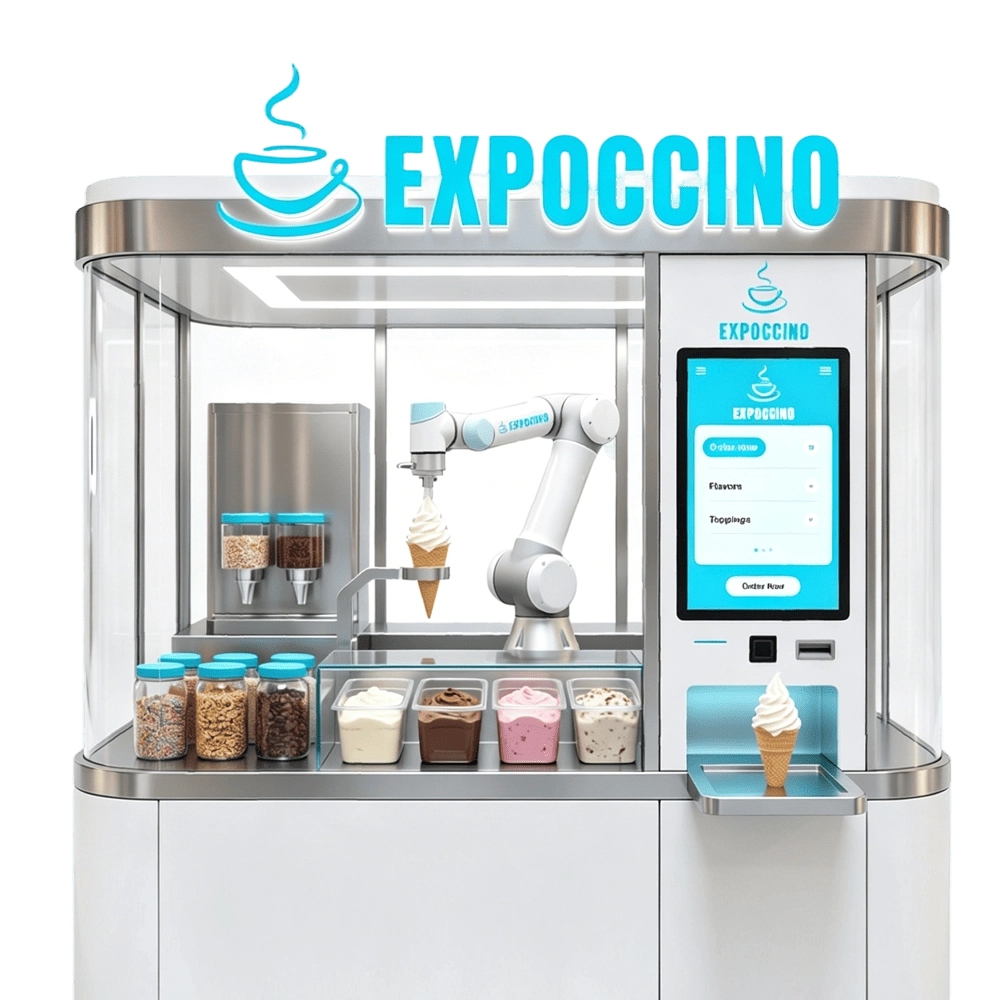
Expoccino Swirl is an AI-powered fancy ice cream robot that delivers ritual-worthy treats in paper cups. Robotic arms replicate handcrafted swirling layers and delicate textures directly inside paper cups, creating eye-catching, Instagram-worthy servings. Choose between classic soft-serve or light, refreshing frozen yogurt for diverse taste preferences.
With a compact 1.5 m² footprint and a 30-inch OLED interactive screen, it enables engaging human-machine interaction, perfect for high-end venues. Operating 24/7 unattended with an energy-efficient and low-maintenance design, it brings delightful frozen treats to customers anytime.
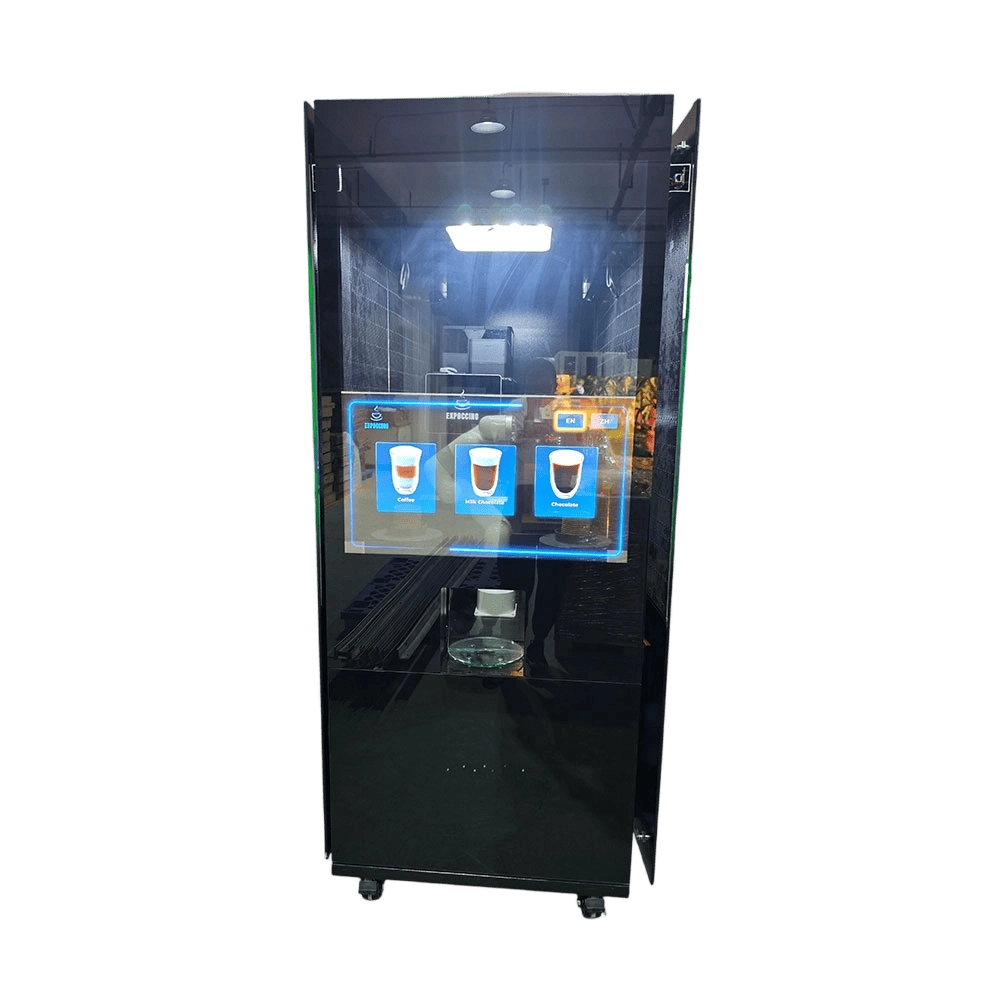
EXPOCCINO creates an immersive, futuristic coffee experience center. More than just a piece of equipment, it is a revenue-generating asset that enhances foot traffic and venue appeal through sophisticated robotic arm interaction and delivery technology, a multilingual user interface, and 24/7 fully unattended operation.
It aligns perfectly with public interest in specialty coffee and artificial intelligence, while helping brands gain extensive visibility, recognition, and market influence.
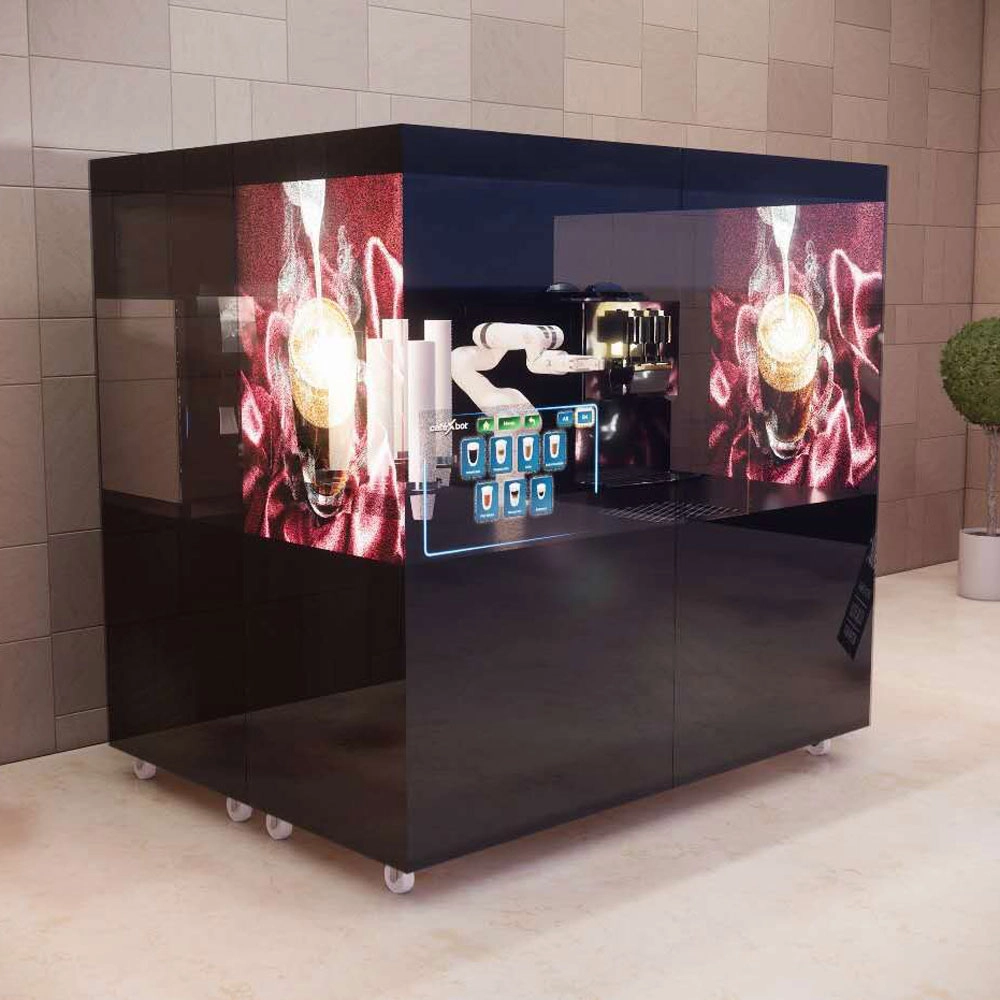
Enjoy doing your business with 100% automation. It is the only robotic kiosk serving multiple products, including hot and iced coffee, hot chocolate, ice cream with toppings, snacks, and tea.
It features a talking robotic kiosk equipped with AI speech recognition. The robot jokes with visitors to attract attention and invite them to buy. Additionally, it is the only robotic kiosk capable of serving up to 4 cups in a single order.
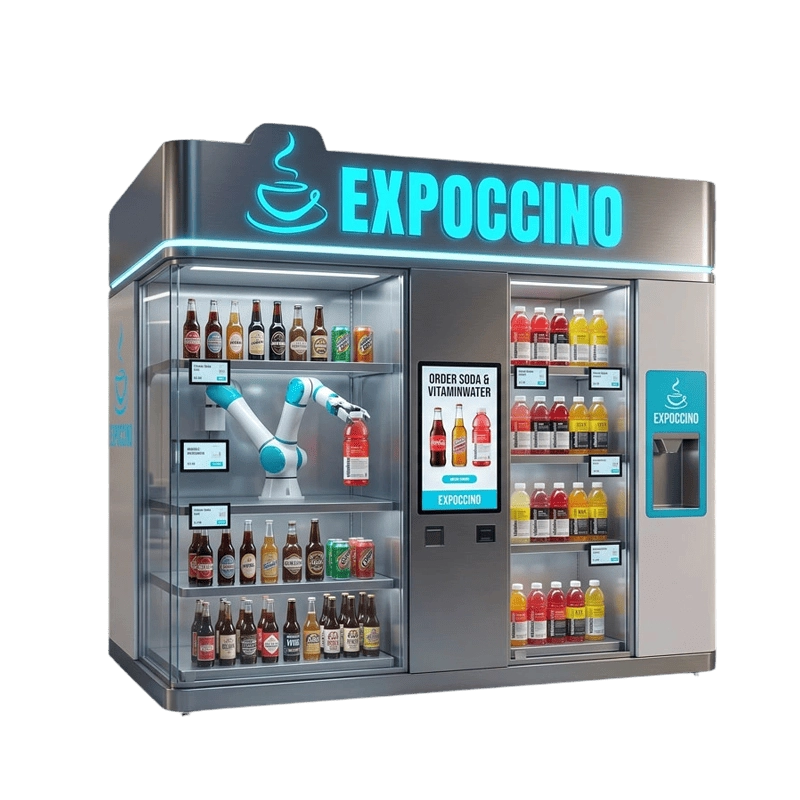
Expoccino Surge, the compact unmanned beverage kiosk, covers less than 5 m². Built with integrated robotic arms and a transparent OLED interactive screen, it offers 24-hour convenient service for everyone.
We carefully source natural fermented fruit & vegetable extracts and multivitamin ingredients, paired with freshly infused bubbles. Zero sugar and preservative-free, our drinks free you from the burden of traditional sugary sodas.
With an acid-resistant design, constant-temperature preservation, and smart cloud management, it is easy to maintain. Its sleek look fits malls, offices, campuses, and scenic spots, bringing healthy sparkling drinks closer to daily life.
Delivering hospitality experiences that reduce costs, boost sponsor value, and drive engagement.
Email: sales@expoccino.com
WhatsApp:+86 137 1745 4543
Tian’an Center, Jihua Dong Rd., Guicheng District, Nanhai, Foshan City, Guangdong Province, China.
 Scan QR Code
Facebook
Linkedin
Instagram
Linkedin
Twitter