
Automatic Ice Cream Vending Machine Operation: Daily Cleaning, Refilling and Maintenance
Operating an automated dessert station requires a clear understanding of daily maintenance, food safety compliance, and robotic hardware reliability. Throughout my 15 years overseeing unattended retail systems, I have seen that maintaining a commercial robotic ice cream vending machine involves a precise daily cadence: clean-in-place (CIP) pasteurization cycles, careful handling of liquid dairy mix to prevent bacterial growth, and routine multi-axis robotic calibration. When these protocols are standardized, operators can expect significant uptime, safe food handling under strict health codes, and consistent product quality without requiring around-the-clock labor.
Sustaining Dairy Integrity: Daily Sanitation and Hygiene Protocols
Dairy products are vulnerable to temperature abuse and microbial contamination if standard operating procedures are overlooked. During my field audits across shopping malls, transit hubs, and amusement centers, food safety failures rarely stemmed from robotic mechanical breakdown; they almost always traced back to poor sanitation schedules. Operating an automated soft-serve or frozen yogurt kiosk requires rigorous sanitation to satisfy strict municipal health codes and global food safety mandates.
Implementing Clean-In-Place (CIP) and Thermal Pasteurization
Modern automated dispensing hardware utilizes Clean-In-Place (CIP) engineering, minimizing manual disassembly. In my installations, I configure the machine's automated thermal treatment cycle nightly. The machine heats the dairy hopper and freezing cylinder to 150°F (65.5°C) for a minimum of 30 minutes, satisfying standards set by the U.S. Food and Drug Administration (FDA) HACCP principles to eliminate pathogens like Listeria monocytogenes and Salmonella.
Following thermal pasteurization, the automated flush cycle purges internal fluid pathways with an EPA-registered sanitizing wash. Technicians simply need to inspect the effluent discharge tube to ensure no milk-stone residue builds up inside the lines. This daily autonomous cycle maintains food safety compliance while keeping on-site labor to under twenty minutes per visit.
Sanitizing Dispensing Nozzles, Shrouds, and Splash Zones
While automated CIP systems handle interior tubing, exterior dispensing spouts and robotic end-effectors require targeted physical cleaning. Daily maintenance should begin with sanitizing the dispensing nozzle, ambient drip tray, and acrylic barrier screen. Sugar splatter and condensed dairy can form films where airborne spores settle if neglected.
I train technicians to use dedicated, non-abrasive food-contact wipes saturated with a 200 ppm quaternary ammonium solution. Wiping down the nozzle tips and photoelectric cup-drop sensors prevents optical misfires and keeps the service window spotless for approaching customers.
Managing Drain Traps, Condensate Runoff, and Waste Buckets
Every commercial freezing unit produces condensate and minor product purge during automated rinse cycles. Neglecting internal collection reservoirs leads to unpleasant odors and pest issues. Daily procedures require emptying, rinsing, and chemically sanitizing the internal waste tank, as well as confirming that the overflow sensor functions properly to prevent operational flooding.
Ingredient Replenishment and Supply Chain Quality Assurance
Refilling an automated kiosk involves more than simply pouring liquid mix into a tank. Because frozen dairy products change consistency based on temperature and aeration, maintaining standard procedures for ingredient handling directly affects overrun percentages, flavor profile, and machine reliability.
Liquid Base Handling and Strict Cold-Chain Monitoring
Raw dairy and vegan oat bases must be handled within a documented cold chain. In accordance with guidelines from the World Health Organization (WHO), dairy products should remain below 41°F (5°C) from warehouse arrival to dispensing. When refilling the machine hopper, technicians must confirm the liquid temperature using an infrared thermometer before pouring.
Hopper pre-cooling assemblies keep products chilled, but introducing warm mix forces the compressor into overdrive. This risks partial churning, which can clog freeze-barrel scraper blades and create ice crystals that ruin the soft-serve texture.
Managing Dry Toppings, Syrups, and Consumables
Topping carousels, syrup pumps, spoons, and cup dispensers demand methodical replenishment. Syrups must be loaded using clean aseptic quick-connect adapters to prevent air bubbles from interfering with volumetric dosing pumps. Dry toppings, such as sprinkles, crushed nuts, and cookie crumbs, must be kept free of humidity. I always confirm that desiccant seals on topping hoppers are intact to prevent clumping, which could otherwise stall the stepper motors.
Robotic Cup Dispenser Restocking and De-nesting Alignment
A common operational hitch involves mechanical cup jams caused by bent rims or static cling. Technicians should inspect sleeves of paper or PLA cups before inserting them into gravity carousel tubes. Confirming that the pneumatic de-nester collar moves freely and aligns with optical proximity sensors ensures cups drop smoothly into the robotic transfer arm.
| Comparison Factor | Traditional Approach | AI-Driven Approach |
|---|---|---|
| Cleaning & Sanitation Schedule | Manual teardown (2-3 hours daily) with risk of human error | Automated daily CIP thermal cycles with cloud audit verification |
| Inventory & Level Monitoring | Visual dipstick checks during physical visits | Real-time IoT load cells and volumetric computer vision tracking |
| Diagnostic & Maintenance Response | Reactive callouts after machine stops dispensing | Predictive vibration/thermal telemetry preventing component failure |
| Temperature Regulation | Analog thermostats with manual daily logs | Multi-zone digital feedback with automated cut-offs |
Preventive Maintenance and Robotic Subsystem Calibration
Preventative engineering forms the backbone of profitable automated retail. Because automated food service equipment runs continuously without on-site staff, components such as scrapers, refrigeration heat exchangers, and articulated robotic arms need regular preventative care.
Beater Blade Inspections and Scraper Wear Cycles
Inside the freezing cylinder, beater shafts spin continuously to scrape frozen product and incorporate air. The Delrin or composite scraper blades wear down over time. During bi-weekly deep cleaning, technicians should run their fingers along the scraper edges to feel for burrs or thinning. Operating worn blades lowers refrigeration efficiency, increases freeze times, and exerts excess torque on drive motors.
Condenser Coil Dusting and Airflow Maintenance
Commercial refrigeration systems fail primarily because of dirty condensers. Dust and grease coat condenser fins, preventing effective heat rejection. I instruct technicians to clean the air filters and brush the aluminum fins using an anti-static vacuum bi-weekly. Keeping condenser coils clean lowers compressor head pressure, reduces energy consumption, and extends compressor operating life.
Six-Axis Articulated Arm Calibration and Belt Tensioning
Unlike simple drop-style vending boxes, modern robotic dessert kiosks use multi-axis robotic arms to swirl ice cream, apply toppings, and present cups to patrons. These robotic arms rely on harmonic drives and timing belts that experience micro-deflections over millions of duty cycles. Monthly maintenance routines should include verifying zero-point joint calibration, checking belt tensions against factory resonance specs, and applying food-grade lubricant compliant with ISO 22000 standards for incidental food contact.
Expanding Automation: Integrating Robotics in Food and Beverage Formats
My years optimizing unattended retail make it clear that the technology supporting ice cream kiosks applies equally well across the automated food sector. Operators who build successful dessert kiosks often expand their operations by deploying robotic kiosk solutions across complementary categories, particularly automated beverage and coffee service.
Managing a commercial soft-serve setup requires thermal regulation, volumetric pumping, pneumatic management, and pick-and-place robotics. These exact engineering competencies apply directly to high-margin commercial beverage hardware. For example, deploying a modern robot coffee machine or automated robot coffee maker relies on identical principles: precision fluid handling, automated cleaning cycles, and consistent robotic cup handoffs. Unattended beverage equipment, such as an advanced robot espresso machine or an espresso machine robot running unattended 24/7, relies on the same preventative maintenance routines detailed above.
As commercial operators adopt automated concepts, integrating reliable systems becomes essential. Whether managing soft-serve kiosks or launching High Quality espresso solutions, partnering with an experienced manufacturer that understands robotic automation and sanitation engineering is key to scaling successfully. You can request a quote today to review customizable robotic retail systems designed for reliable field service and low daily maintenance.
Frequently Asked Questions
How often must a robotic ice cream vending machine be cleaned?
Basic external sanitation, nozzle wiping, and waste tray emptying must occur daily. Comprehensive Clean-In-Place (CIP) thermal cycles run nightly on automated units. Complete disassembly, replacement of wearable O-rings, and deep sanitization of the beater assembly should take place every 7 to 14 days, depending on local municipal health regulations.
What cleaning chemicals are safe for robotic soft-serve machines?
Always use EPA-approved, non-corrosive, no-rinse sanitizers formulated specifically for commercial dairy equipment. Quaternary ammonium compounds (diluted to 200 ppm) or chlorine-based food-contact sanitizers (100 ppm) are standard. Never use abrasive scrubbers or standard industrial detergents, as they scratch stainless steel surfaces and degrade food-grade silicone seals.
How do operators monitor temperature compliance inside automated kiosks?
Modern kiosks integrate IoT temperature data loggers within the hopper, freeze cylinder, and auxiliary topping bays. These sensors feed continuous telemetry to an operator dashboard. If temperatures exceed 41°F (5°C) for more than 45 minutes, automated safety lockouts trigger instantly, preventing the machine from dispensing compromised dairy to consumers.
What causes dispensing nozzles to drip or clog?
Dispensing issues are usually caused by three factors: degraded or improperly lubricated piston O-rings, uncalibrated overrun air-bleed settings causing mix separation, or sugar buildup inside the nozzle assembly. Daily visual inspections and regular application of food-grade petrol-gel to sealing rings prevent dripping.
Can a single technician maintain multiple robotic vending units?
Yes. Because automated machines feature autonomous pasteurization and digital inventory telemetry, daily refilling and wipe-down routines take roughly 15 to 25 minutes per unit. A single technician can easily manage route operations covering 8 to 12 kiosks daily within a metropolitan territory.
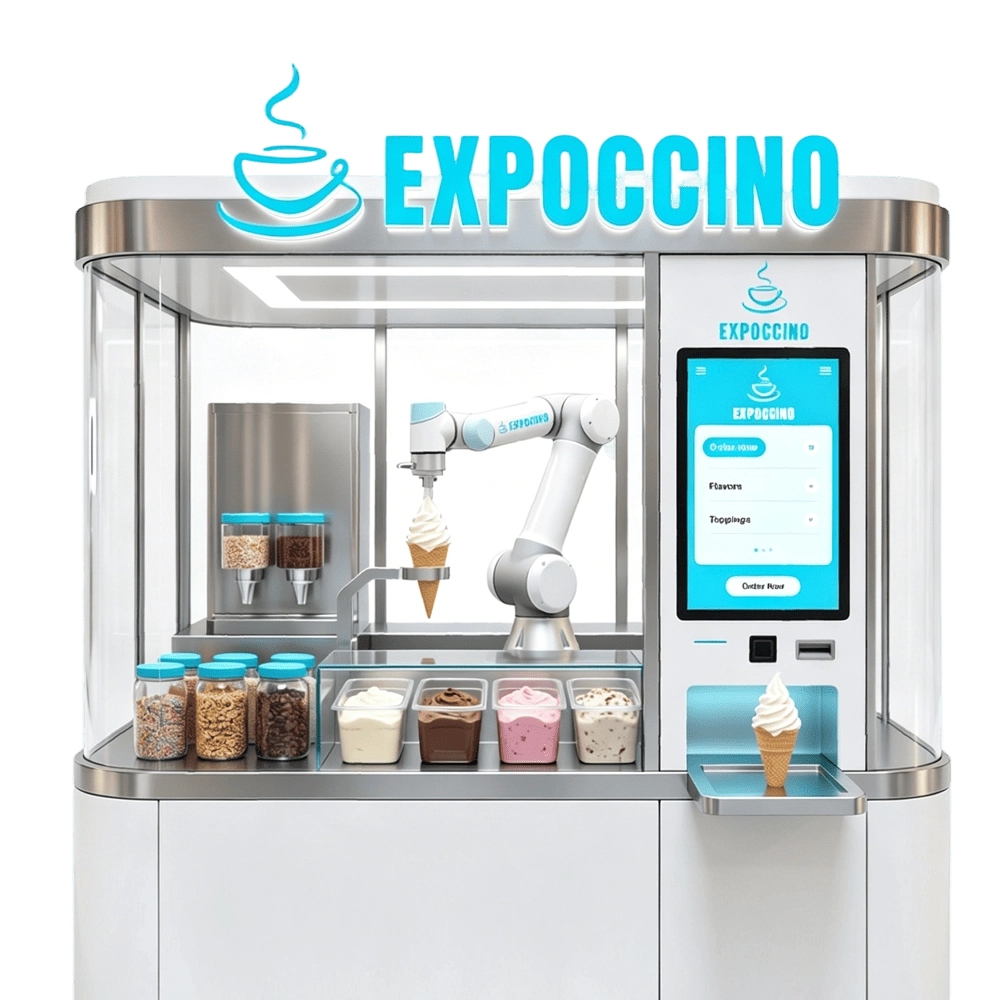
Expoccino Swirl is an AI-powered fancy ice cream robot that delivers ritual-worthy treats in paper cups. Robotic arms replicate handcrafted swirling layers and delicate textures directly inside paper cups, creating eye-catching, Instagram-worthy servings. Choose between classic soft-serve or light, refreshing frozen yogurt for diverse taste preferences.
With a compact 1.5 m² footprint and a 30-inch OLED interactive screen, it enables engaging human-machine interaction, perfect for high-end venues. Operating 24/7 unattended with an energy-efficient and low-maintenance design, it brings delightful frozen treats to customers anytime.
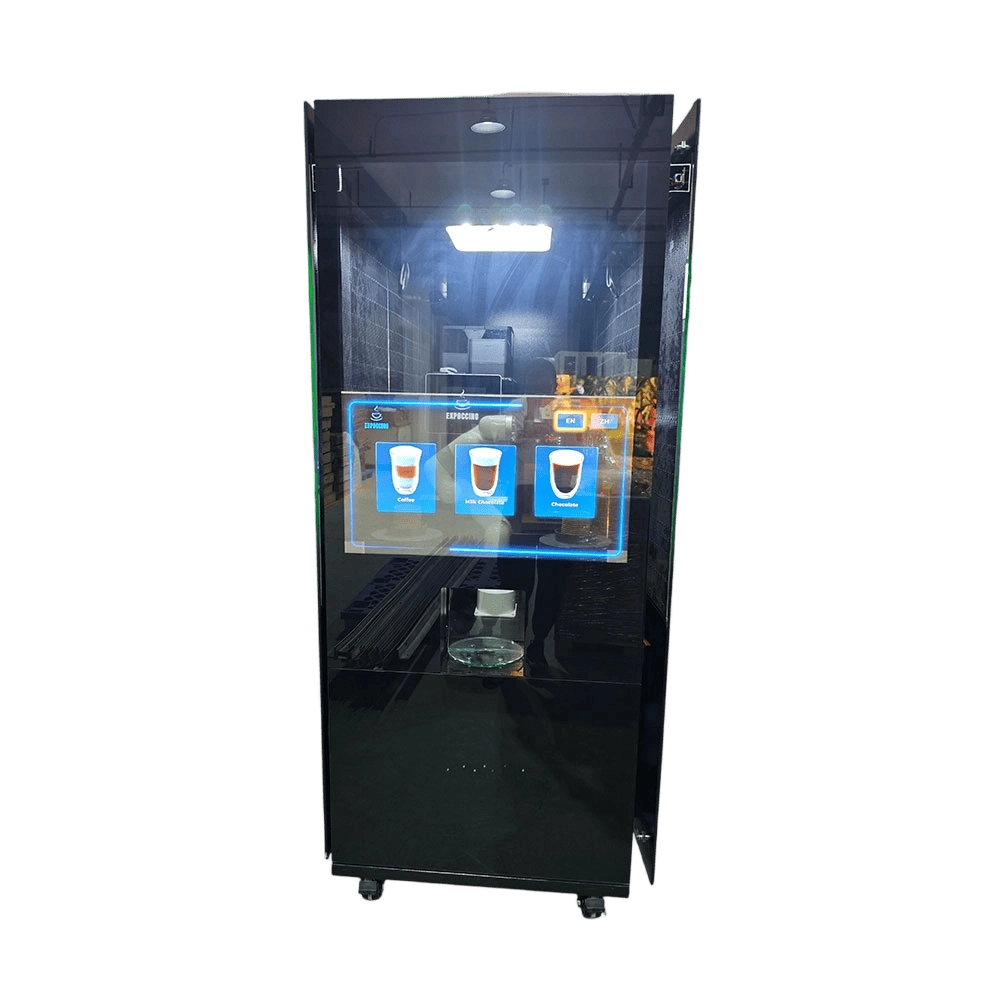
EXPOCCINO creates an immersive, futuristic coffee experience center. More than just a piece of equipment, it is a revenue-generating asset that enhances foot traffic and venue appeal through sophisticated robotic arm interaction and delivery technology, a multilingual user interface, and 24/7 fully unattended operation.
It aligns perfectly with public interest in specialty coffee and artificial intelligence, while helping brands gain extensive visibility, recognition, and market influence.
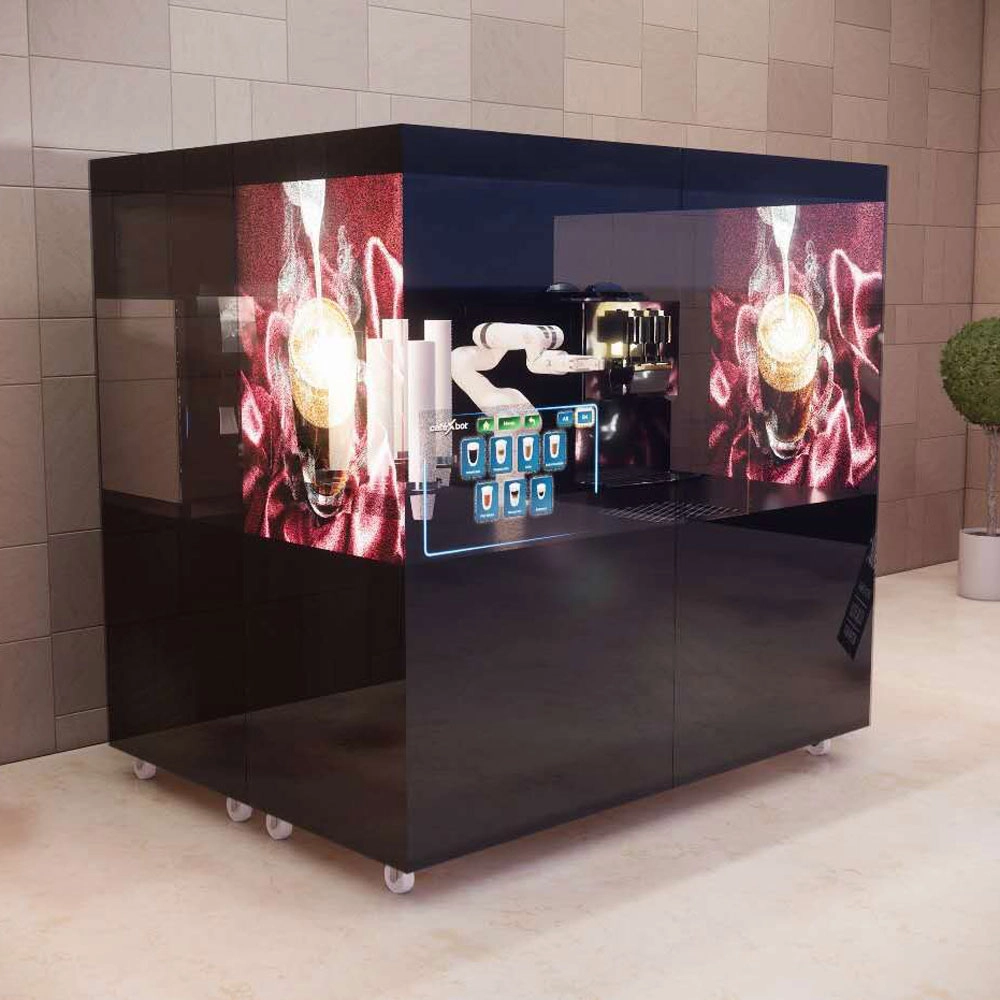
Enjoy doing your business with 100% automation. It is the only robotic kiosk serving multiple products, including hot and iced coffee, hot chocolate, ice cream with toppings, snacks, and tea.
It features a talking robotic kiosk equipped with AI speech recognition. The robot jokes with visitors to attract attention and invite them to buy. Additionally, it is the only robotic kiosk capable of serving up to 4 cups in a single order.
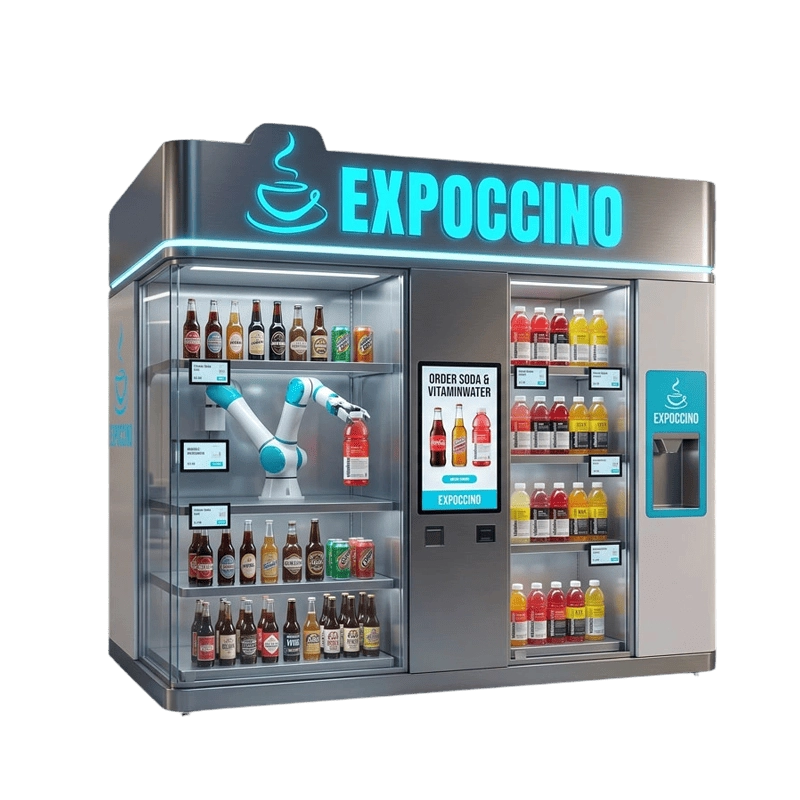
Expoccino Surge, the compact unmanned beverage kiosk, covers less than 5 m². Built with integrated robotic arms and a transparent OLED interactive screen, it offers 24-hour convenient service for everyone.
We carefully source natural fermented fruit & vegetable extracts and multivitamin ingredients, paired with freshly infused bubbles. Zero sugar and preservative-free, our drinks free you from the burden of traditional sugary sodas.
With an acid-resistant design, constant-temperature preservation, and smart cloud management, it is easy to maintain. Its sleek look fits malls, offices, campuses, and scenic spots, bringing healthy sparkling drinks closer to daily life.
Delivering hospitality experiences that reduce costs, boost sponsor value, and drive engagement.
Email: sales@expoccino.com
WhatsApp:+86 137 1745 4543
Tian’an Center, Jihua Dong Rd., Guicheng District, Nanhai, Foshan City, Guangdong Province, China.
 Scan QR Code
Facebook
Linkedin
Instagram
Linkedin
Twitter